
Xiaomi has officially addressed recent market rumors: Sky Nomad is not a standalone sub-brand, but rather Xiaomi's second product series — following the SU7 and YU7 lines. On June 11, the company clarified via its official Weibo account: "Sky Nomad is a brand-new product series under Xiaomi Automobile."
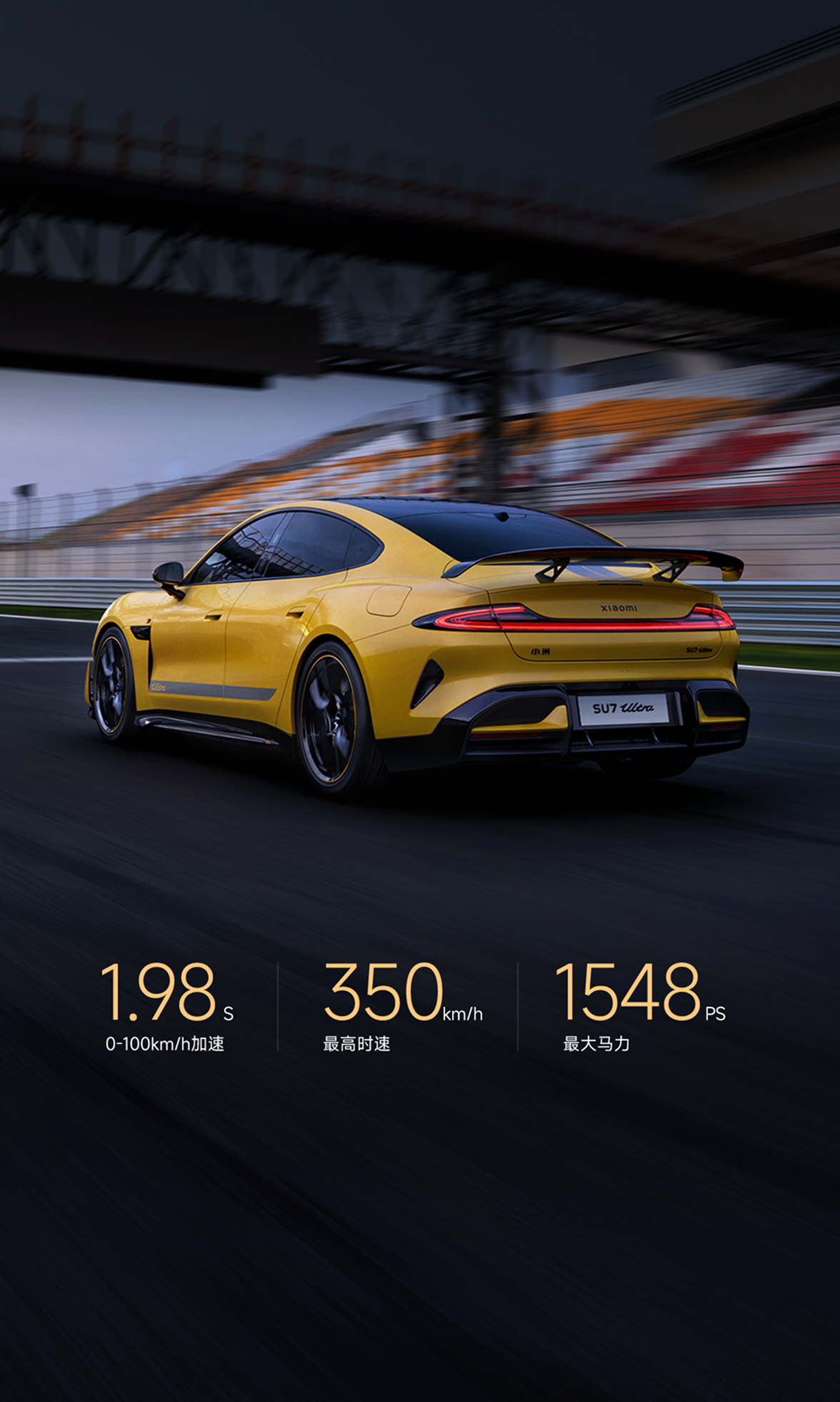
Xiaomi's founder and CEO Lei Jun further elaborated the dual-series strategy: The SU7/YU7 series targets 'driver-focused vehicles', emphasizing performance and handling; Sky Nomad, by contrast, centers on 'intelligent, adaptable, large-space SUVs' — designed to meet multi-scenario family mobility and lifestyle-extension needs. This positioning directly targets China's mainstream extended-range SUV segment, competing head-on with Li L9 and AITO M9.
The official teaser poster revealed the side profile of the series' debut model for the first time: boxy and rugged, with high ground clearance and an all-new front-end design — distinctly different from the SU7's sleek fastback styling and the YU7's urban crossover character. Lei Jun dubbed it a "mobile N-dimensional living space", highlighting interior layouts that dynamically reconfigure based on usage scenarios — transforming, when parked, into a single-person workspace, a two-person café nook, a three-person lounge, or a full-family play cabin.
To support this idea, Xiaomi launched full-stack in-house development of a dedicated platform — the Kunlun Architecture — starting in early 2023. Built around a flat floor and long-track sliding seats, the platform's reconfiguration capability relies on the synergistic integration of "AI technology + intelligent ecosystem + smart manufacturing".
According to previously leaked information confirmed by Xiaomi, the debut model carries the internal codename Kunlun N3 and is expected to launch as the N90. At over 5.3 meters long, it qualifies as a full-size SUV — and will be Xiaomi's first extended-range electric vehicle (EREV): equipped with a battery exceeding 70 kWh, delivering a CLTC all-electric range of 400–500 km; its range extender serves solely as a generator, enabling a total system range expected to surpass 1,500 km. This battery capacity exceeds that of the current production Tesla Model Y base model (62.5 kWh).
Pricing is rumored to start as low as ¥200,000 (~US$29,400), significantly undercutting Li L9 and AITO M9, whose typical entry prices exceed ¥250,000. Notably, MIIT approved Xiaomi's production of extended-range models at the Beijing plant on June 10 — clearing a key path to volume rollout.
This launch also ties directly to Xiaomi's 2026 delivery target: 550,000 units annually — a 34% increase over 2025's ~410,000. Yet only 185,000 units were delivered in H1 2026, representing just ~34% of the annual goal. To hit the target, monthly deliveries in H2 must average ~60,000 — nearly double H1's ~30,000 per month. While Lei Jun has not disclosed N90's exact launch date, multiple sources confirm it will officially go on sale in H2 2026.
Comments
0 commentsNo comments yet. Be the first!
Post Comment