
Design: The 'Big Yet Practical' Philosophy of a Full-Size Six-Seater
As an editor who routinely tests family-oriented vehicles, my core expectation for a full-size six-seat SUV has never been about spec-sheet stacking — but rather achieving a balanced triad: driveability, comfort, and usability — all within that 'big' footprint. This time, we conducted a comprehensive 7-day, 820-kilometer real-world test on the all-new 2026 Li L9 in both Ultra and Livis trims — covering urban congestion, 120 km/h highway cruising, winding paved mountain roads, and rural unpaved gravel lanes. The route was fully self-planned with zero pre-set manufacturer itineraries. All conclusions stem directly from subjective driving impressions and onboard computer data — no marketing narratives included.
Powertrain: The 5C Extended-Range System — A Pragmatic Solution for Commuting & Cross-City Trips
The new Li L9 features a 5C extended-range architecture built on an 800V high-voltage platform, paired with a third-generation in-house 1.5T four-cylinder range extender. Official specs: 72.7 kWh high-voltage battery; CLTC all-electric range of 420 km; WLTC all-electric range of 350 km; CLTC combined range of 1,650 km; WLTC combined fuel consumption of 6.3 L/100 km.
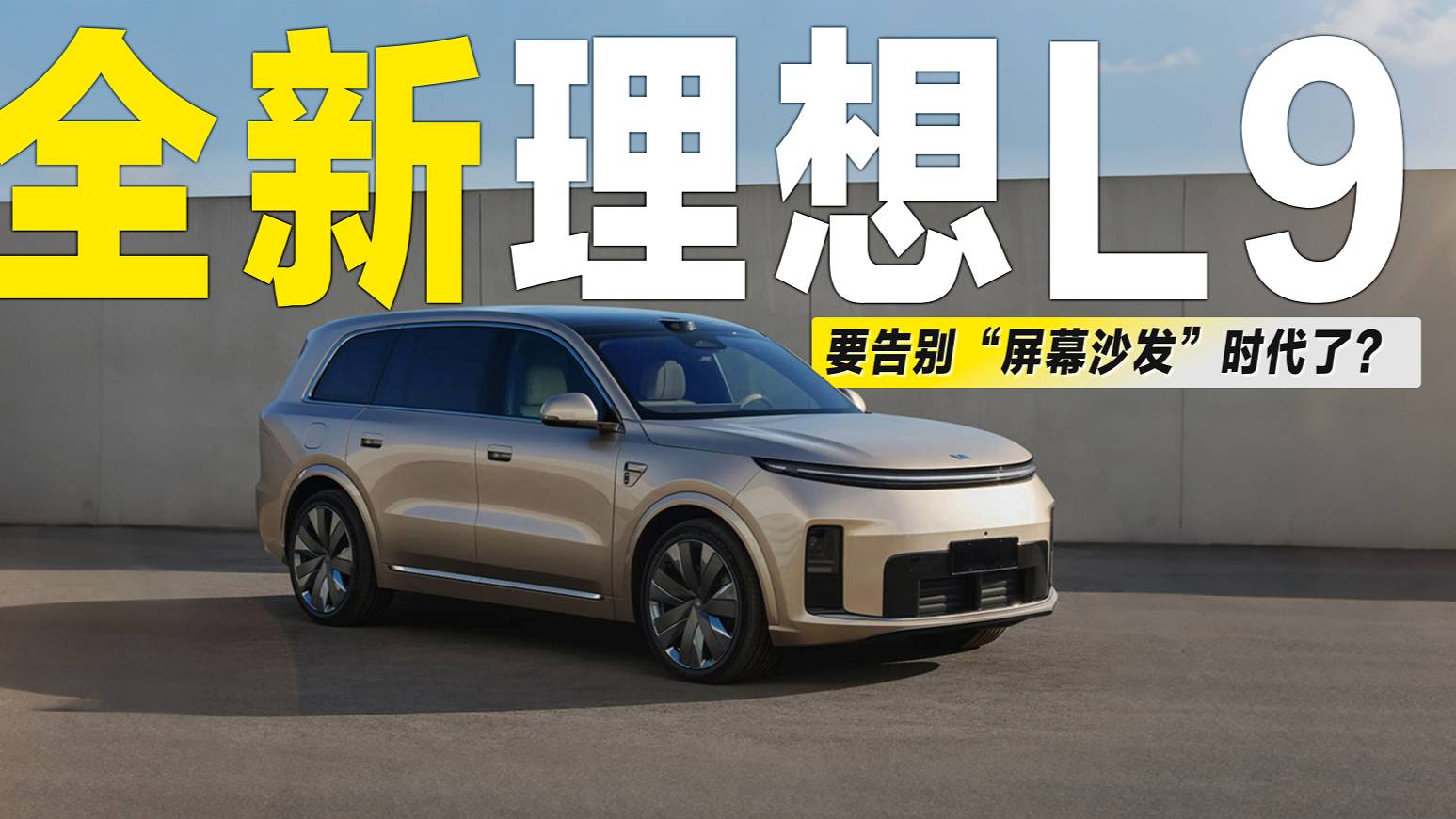
In real-world testing, at a steady 120 km/h on smooth pavement under ambient temperatures, the vehicle consumed 7.2–7.5 L/100 km in charge-sustaining mode — slightly above the WLTC figure but well within expected variance for a large SUV with relatively high drag coefficient. In-city energy consumption (≤60 km/h, pure EV mode) closely matched official figures. For charging, only Li's proprietary ultra-fast chargers deliver full 5C output; third-party stations are capped at 2C. As of now, Li operates over 4,000 proprietary ultra-fast charging stations nationwide — including more than 1,300 along expressways — making cross-province travel feasible, albeit requiring advance route planning.
Maintenance policy is standardized across trims: the range extender requires servicing every 3 years or 30,000 km (whichever comes first); minor service costs ¥799 per visit, major service ¥929. Long-term usage tip: With daily commutes ≤60 km and home charging access, EV-only usage can exceed 80%; over 60,000 km, estimated three-powertrain maintenance costs total ~¥3,500. Conversely, relying solely on gasoline significantly increases ownership costs versus comparable hybrid models.
Chassis: Livis' 800V Active Suspension + Full Drive-by-Wire vs. Ultra's Proven Setup
This is the most consequential distinction between trims. The Livis trim includes standard 800V active suspension plus a complete drive-by-wire chassis (featuring steer-by-wire, rear-wheel steering, and EMB electronic mechanical braking). The Ultra trim uses conventional air suspension with basic steer-by-wire — omitting both the 800V hydraulic suspension and EMB braking.
The 800V active suspension delivers up to 10,000 N of active support per wheel, with damping response in just 5 ms and control frequency at 200 Hz — integrated with road-preview functionality. During testing, it eliminated secondary bounce over consecutive speed bumps in city traffic; suppressed body roll effectively through mountain curves, reducing motion sickness for second-row passengers; maintained stable pitch during emergency lane changes at 120 km/h; and actively lifted ride height when encountering deep potholes or abrupt drops — enhancing off-pavement capability. While the Ultra lacks high-voltage active adjustment, its ride comfort remains top-tier among peers.
Rear-wheel steering is standard across both trims, with an official minimum turning radius of 5.3 m. At low speeds, counter-phase steering dramatically shrinks turning circles — making U-turns and tight garage maneuvers far easier. At highway speeds, same-phase steering improves lane-change stability. Steer-by-wire allows customizable steering ratio and effort; isolates road impacts and reduces mid-to-high-frequency noise by >3 dB(A). EMB braking — exclusive to Livis — delivers a claimed 100–0 km/h stopping distance of 33.8 m and eliminates brake-fluid replacement, simplifying long-term maintenance.
Intelligence: Mach Full-Scenario ADAS — Strong Perception, Clear Boundaries
Both trims feature the Mach Full-Scenario Advanced Driver Assistance System, powered by one main LiDAR sensor, multiple high-resolution cameras, and ultrasonic radars — backed by dual NVIDIA Orin-X chips delivering 508 TOPS of compute power. It supports urban and highway NOA (Navigate on Autopilot). Feature availability differs by trim: Livis ships with suspension-linked ADAS enabled out-of-the-box; Ultra requires a paid OTA upgrade.
Forward detection range is rated at 300 m; AEB activates up to 130 km/h. New capabilities include overhead-obstacle AEB — detecting garage beams or pipes while reversing — and UWB radar-enabled side-door opening collision avoidance. In practice, highway navigation, urban assist, autonomous lane changes, and ramp handling operate smoothly. When synchronized with the full drive-by-wire chassis, system commands execute more fluidly — noticeably reducing driver fatigue on long hauls.
But critical caveats apply: LiDAR penetration degrades in heavy rain, fog, or under intense nighttime glare; system behavior turns conservative in older urban areas with dense pedestrian/cyclist traffic; functionality is temporarily impaired if the roof-mounted LiDAR sensor accumulates tree sap, snow, or thick dust — common limitations across perception-based systems, not faults. Cleaning restores full operation.
Cabin: Four Zero-Gravity Flagship Seats — Comfort Meets Compromise
The driver, front passenger, and both second-row seats offer zero-gravity recline (third row does not); maximum recline angle is 120°. All four seats feature ventilation, heating, and pneumatic massage. Leveraging the 3,125 mm wheelbase, second-row legroom is generous; engaging zero-gravity mode mid-drive dampens motion and eases prolonged sitting fatigue. Supporting hardware is robust: seven-zone climate control; 29-inch 6K 90Hz front dual-screen; 21-inch motorized 4K rear screen; 10-liter vehicle refrigerator; 9.3.6-channel audio system; idle cabin noise measured at 36 dB.
Safety is optimized for reclined posture: 3,075 mm pressure-retaining side curtain airbags, anti-submarining seat cushion airbags, and synchronized seatbelt pretensioners. However, practical trade-offs exist: seat ventilation blows forward — not ideal for rapid cooling after hot-car exposure; the center armrest in second row cannot fully deploy when zero-gravity mode is active; eco-leather upholstery shows edge fraying after 2–3 years of frequent friction; and with six occupants, trunk depth falls short — struggling to fit two 20-inch carry-ons plus a standard stroller simultaneously.
Pricing & Verdict: Who Should Buy — and Who Should Skip?
The all-new 2026 Li L9 launched on May 15 and began nationwide deliveries on May 17. Ultra trim carries an official MSRP of ¥459,800; Livis trim is priced at ¥509,800 (local dealer pricing may vary). Estimated 3-year resale value stands at 77–79%; 5-year value at 63–66% — solidly above average for this segment. First owners (non-commercial use) receive extended warranty coverage for the three-powertrain system and range extender; even after resale, the battery and powertrain remain covered for 8 years or 160,000 km.
Ideal for: Multi-generational or multi-child families; drivers logging substantial annual highway mileage; those prioritizing whole-vehicle comfort; users with reliable home charging and primarily urban commuting patterns; and novice drivers seeking lower entry barriers to large-SUV operation via advanced chassis and ADAS support.
Less suitable for: Users operating regularly below –15°C; solo commuters with low six-seat utilization; frequent off-road enthusiasts; buyers demanding forced-air seat ventilation or intensive in-car office workflows; or those without home charging who rely entirely on gasoline — where long-term cost exceeds comparable hybrids.
Trim recommendation is straightforward: Ultra delivers ample capability for budget-conscious families; Livis justifies its premium for buyers seeking the full technical suite — including factory-integrated suspension-linked ADAS — and planning long-term ownership. Don't chase hype — match the car to your real-world needs. That's where rational decisions begin.
Comments
0 commentsNo comments yet. Be the first!
Post Comment