
BYD has officially previewed its all-new Qin Max EV, described by the automaker as a "completely different D-segment flash-charging EV sedan tailored for young users." Scheduled for launch in 2026, the Qin Max EV will serve as the flagship sedan within the Qin family — larger in size and more technologically advanced than the already-in-production Qin L EV.
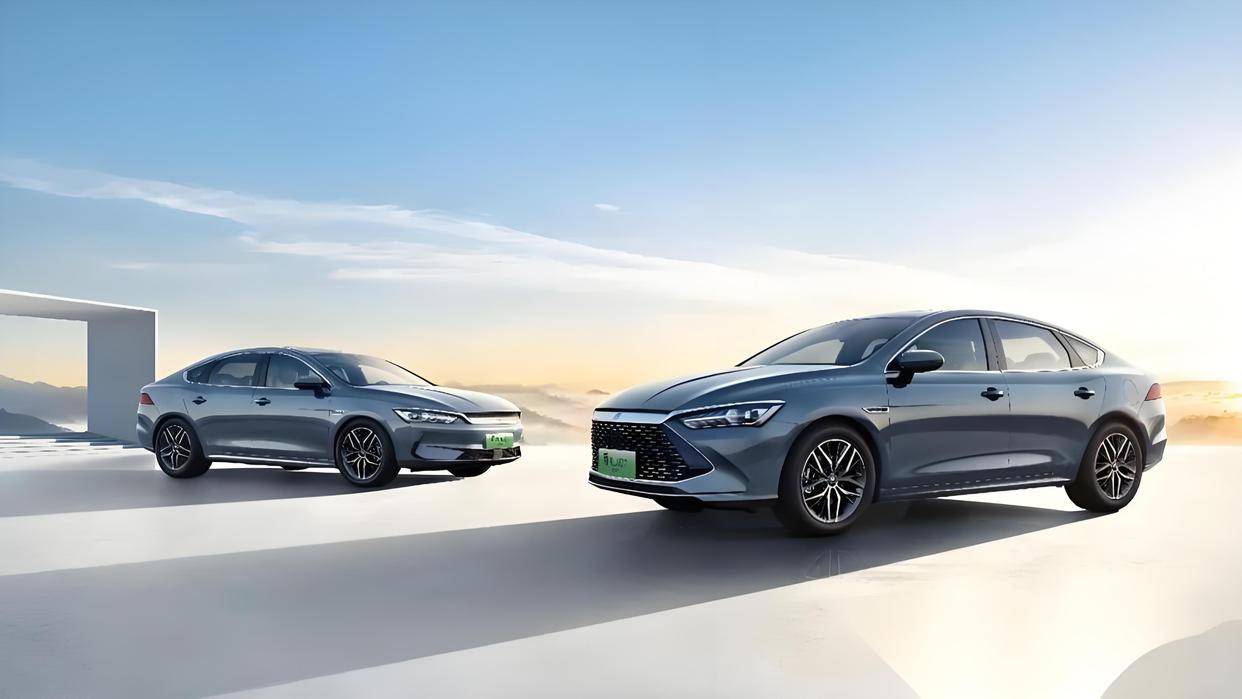
BYD Ocean Network General Manager Lu Tian first revealed details of the Qin Max on the company's official Weibo account this past Sunday. He emphasized that the new model is an "oversized version" of the Qin series — not merely an elongated variant of the Qin L, but a fully reimagined product with redesigned styling language, a new electric drive architecture, and a fundamentally revised energy replenishment strategy, squarely targeting Gen Z car buyers.
According to vehicle registration data previously disclosed by MIIT, the Qin Max measures 4,866 mm in length, 1,880 mm in width, and 1,495 mm in height, with a wheelbase of 2,790 mm. Compared to Tesla Model 3 (4,720 mm × 1,933 mm × 1,442 mm, wheelbase 2,875 mm), the Qin Max features a longer, flatter profile — but a slightly shorter wheelbase — highlighting its balanced focus on sporty proportions and interior practicality.
Powertrain options include two motor configurations: peak outputs of 120 kW (160 hp) and 240 kW (321 hp). Maximum torque figures are not explicitly paired with each motor in the source text and thus remain unlisted. The battery system adopts BYD's next-generation Blade Battery 2.0, available in capacities of 52.868 kWh and 64.315 kWh, delivering estimated CLTC all-electric ranges of 530 km and 630 km, respectively.
Most notably, the vehicle's "flash charging" capability promises just 9 minutes to recharge from 10% to 97% state of charge — and only 5 minutes for 10% to 70% — when equipped with the compatible battery and charging system. These performance claims currently reflect lab or ideal test-cycle conditions and have yet to be validated by independent real-world testing.
Qin Max will be offered in both pure electric and plug-in hybrid (PHEV) variants. For reference, last year's Qin L EV launched at a starting price of ¥119,800 and surpassed 10,000 units sold in its first week. Market expectations suggest the higher-positioned Qin Max EV may start around ¥140,000 — but no official pricing has been announced.
Comments
0 commentsNo comments yet. Be the first!
Post Comment