
Design: Composed and Refined—Balancing Practicality and Dignity
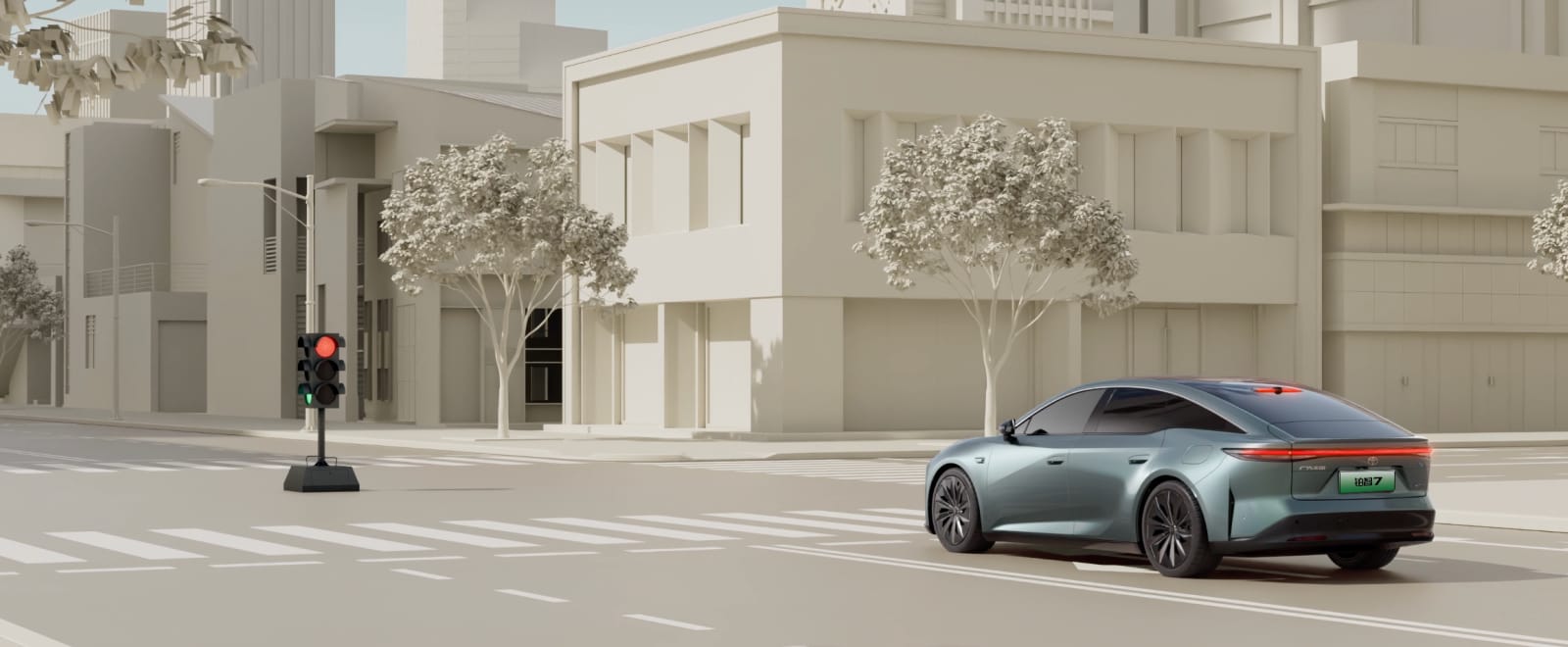
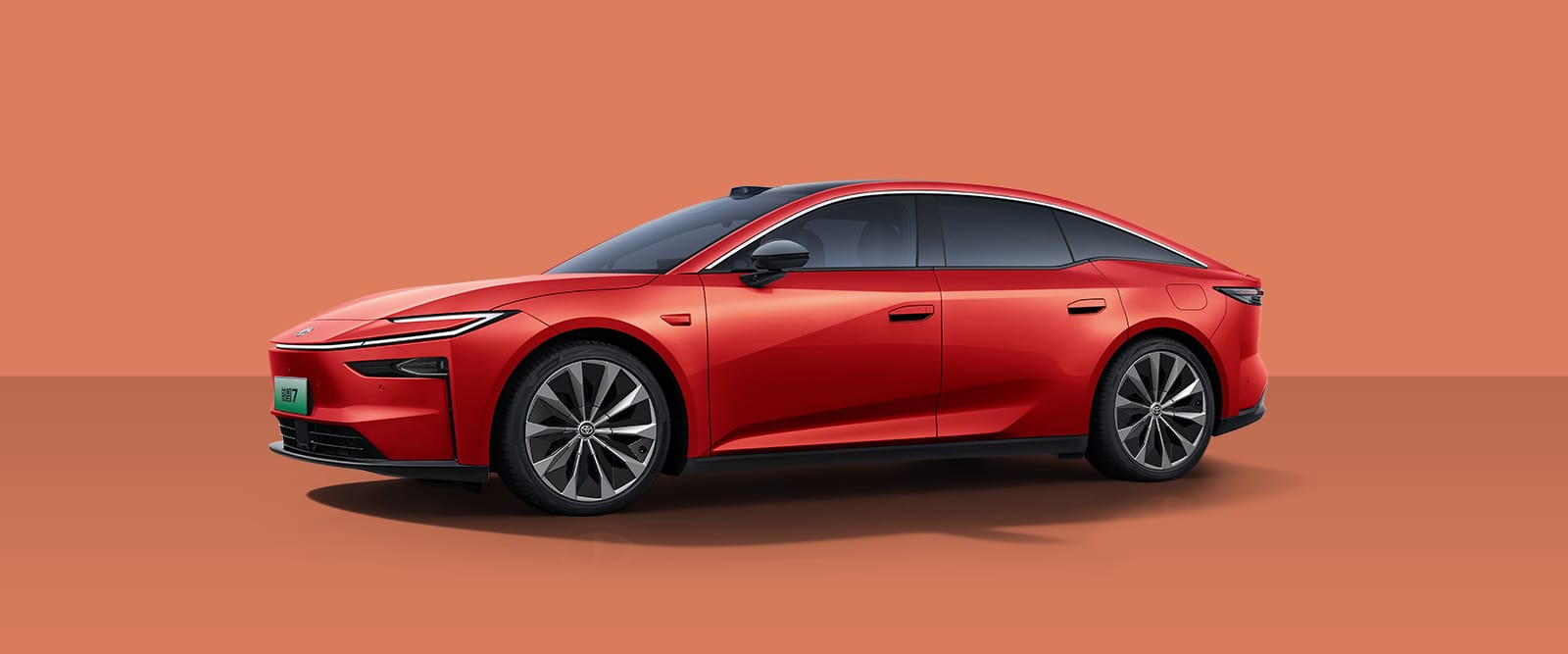
The 2026 GAC Toyota BZ7 avoids flashy sci-fi styling, instead striking a precise balance between ‘family-oriented’ and ‘business-appropriate’ aesthetics. Its closed front grille pairs with a split-type LED lighting system; The star-trail-style full-width daytime running lights stand out vividly under Shenyang’s afternoon sun. The active grille not only improves aerodynamic efficiency but also aids battery thermal management in cold conditions. At 5130×1965×1506 mm (L×W×H) with a 3020-mm wheelbase, it fits squarely into the mid-to-large sedan segment—but dual-Y character lines and 20-inch two-tone alloy wheels lend it a sleek fastback profile. Frameless doors and an arc-shaped full-width rear light strip further diminish visual bulk—delivering both dignified family transport and understated elegance.
Powertrain: Smoothness First—A Textbook Tuning for Family Use
Powered by Huawei’s Zhijing DriveONE rear-mounted permanent-magnet synchronous motor, it delivers 207 kW (282 hp) and 320 N·m peak torque. Yet what truly resonates with families isn’t the spec sheet—it’s the palpable ‘restraint’ throughout the driving experience: linear, gentle throttle response at low speeds eliminates motion sickness for elderly passengers and children; strong mid-range acceleration enables confident highway overtaking; and even at 100–110 km/h cruising speed, there’s ample reserve power—deliberately tuned to avoid aggressive acceleration jolts. Every calibration prioritizes comfort and peace of mind for all occupants.
Chassis & Space: GR-Tuned Suspension + Class-Leading Roominess—All Family Needs Covered
Equipped with front double-wishbone and rear multi-link independent suspension, tuned by Toyota’s GR team. On Beiling Avenue’s bumpy manhole-cover-studded stretch, the suspension absorbs impacts smoothly upfront while offering firm rear-end support—no excessive body bounce. High-speed lane changes and cornering deliver well-controlled roll and stable posture. A 177-cm test driver sat comfortably up front, leaving over two-and-a-half fists of legroom for rear passengers; seat cushion length and thigh support are generous. Three adults fit side-by-side without lateral crowding, and long-haul comfort remains high. The 496-L trunk easily swallows two 28-inch suitcases—though the rear seats don’t fold, limiting flexibility for bulky camping gear.
Intelligence: HarmonyOS Cockpit + Momenta ADAS—Pragmatic Tech Done Right
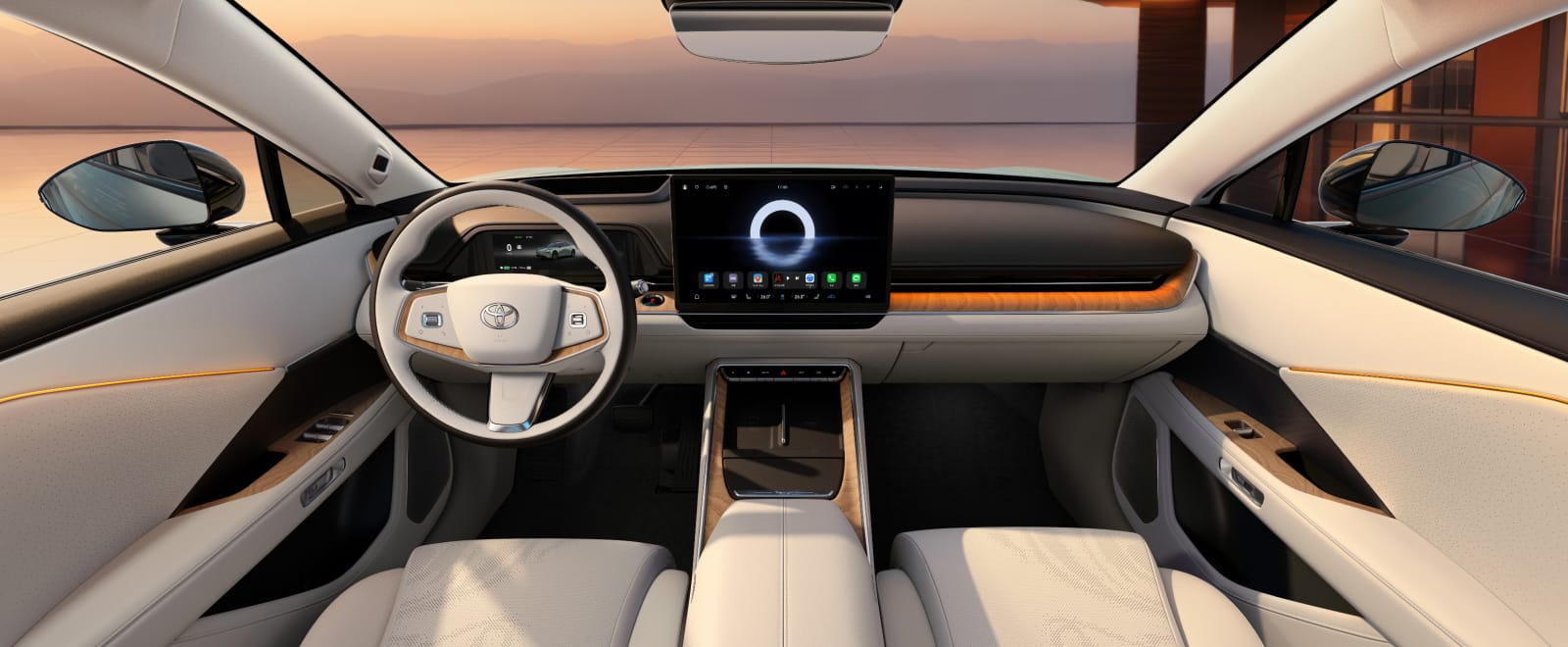
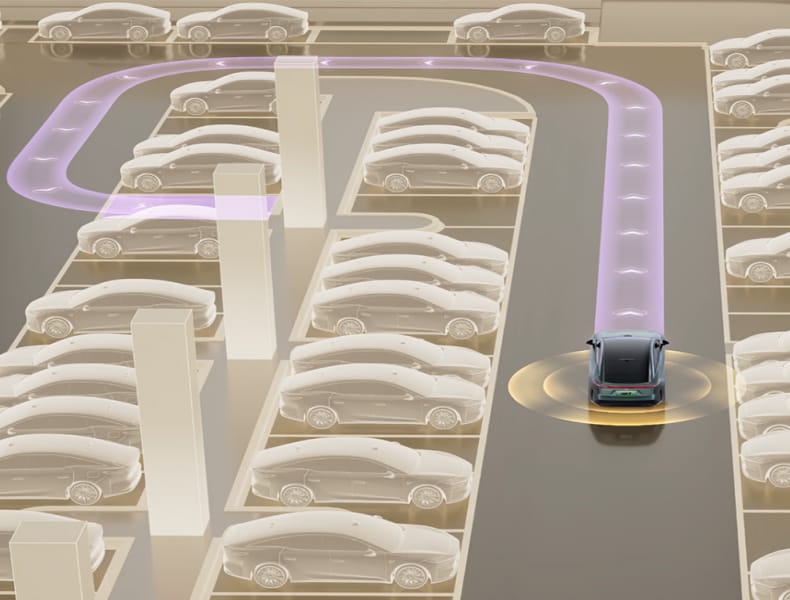
Standard across all trims is HarmonyOS 5 smart cockpit, featuring an 8.8-inch digital instrument cluster and a 15.6-inch central touchscreen. The UI is clean and intuitive, with responsive controls—ideal for older users. Powered by MoLA hybrid large language models, four-zone voice recognition responds reliably to ‘Hello Xiao Yue’, supports multi-turn commands and mid-sentence interruptions. During our drive, front and rear passengers simultaneously issued voice commands—open windows, adjust temperature, set navigation—and the system parsed and executed each accurately. Hardware includes one 192-line LiDAR, eleven cameras, and three millimeter-wave radars. Highway Navigation Pilot handles autonomous lane changes and ramp navigation seamlessly; urban features like traffic-light-aware stop/start, construction-zone rerouting, and non-motorized vehicle avoidance operate with mature logic. The system’s conservative, safety-first philosophy—no showy tricks, no risky maneuvers—makes it the dependable companion every family needs.
Range & Cost Efficiency: 85% Real-World Range Achievement, Just ¥0.1 per Kilometer
Built around a 71.35-kWh LFP battery from CALB, its CLTC-rated range is 600 km. In real-world Shenyang testing (60% city congestion + 40% highway), it achieved 515 km—85% of rated range—with city energy consumption at 13.7 kWh/100 km and highway at 15.8 kWh/100 km. DC fast charging from 30% to 80% takes just 24 minutes; overnight AC charging fully replenishes the pack. At ¥0.7/kWh electricity cost, our 188-km test route cost only ¥19.41—roughly ¥0.1 per kilometer. Compared to equivalent ICE vehicles, commuting 300 km monthly saves hundreds of yuan in fuel costs. Added peace of mind comes via a 3-year/100,000-km comprehensive warranty, dedicated battery coverage, and 5 years of complimentary basic maintenance.
Pricing & Verdict: Balance Is the Highest Form of Luxury for Families
Priced from ¥169,800 to ¥229,800 (MSRP), with dealer incentives bringing it down to ¥159,800–¥214,800, plus up to ¥15,000 trade-in bonus. It doesn’t chase attention with over-spec hardware or inflate anxiety with headline-grabbing specs. Instead, it anchors safety in Toyota’s GOA high-strength body structure, ten airbags, and rigorous multi-layer battery validation. Homey refinement shines through natural wood trim, soft-touch surfaces, Yamaha audio, and 31 thoughtfully placed storage spots. And with HarmonyOS ecosystem integration and Momenta intelligent driving, it bridges the historical tech gap of joint-venture EVs. Within the ¥200,000 pure-electric segment, the BZ7 isn’t the most radical—but it’s unquestionably the most family-smart. It writes ‘dependability’ into every detail.
Comments
0 commentsNo comments yet. Be the first!
Post Comment