
On August 19, the all-new Jetour Shanhai L7 PLUS officially launched, offering six trim levels. The super trade-in price ranges from ¥109,900 to ¥159,900, while the official recommended retail price spans ¥119,900 to ¥169,900. As a midsize plug-in hybrid SUV, the new model targets multi-member families and light overlanding use cases, offering both 5-seat and 2+3+2 7-seat configurations — with LiDAR hardware standard across all trims.
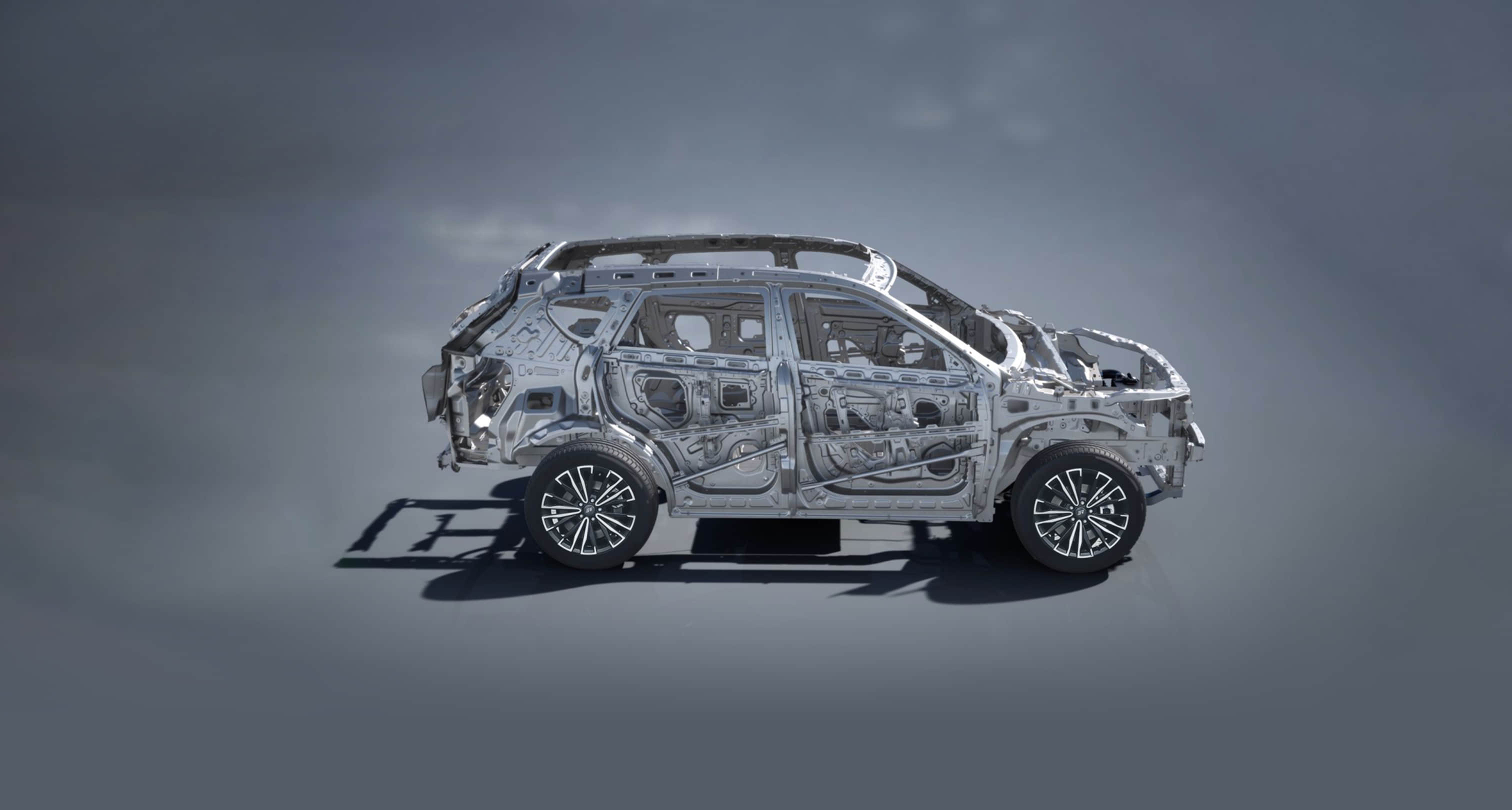
The exterior retains Jetour's family design language: the front fascia features a horizontal DRL strip extending into 'J'-shaped elements at both ends. A roof-mounted LiDAR sensor integrates seamlessly with semi-concealed door handles and a streamlined body profile to enhance both tech appeal and functionality. Dimensions measure 4810 mm × 1930 mm × 1705 mm, with a wheelbase of 2820 mm.
The interior prioritizes home-like comfort, with extensive soft-touch materials covering the dashboard, door panels, and seats. The cabin features a 10.25-inch full-digital instrument cluster and a 15.6-inch sunflower-shaped center display that rotates ±10° horizontally. It runs on Qualcomm SA8255 chips, 24GB RAM + 256GB storage, and TOUR OS 3.2 — supporting iFLYTEK Spark AI large language model and quad-zone voice recognition. Audio is delivered via the Boya Sound 12-speaker system.
The seating system offers 32 configurable layouts, including four reclining modes. Second-row seatbacks support infinite electric adjustment up to 131°, while the third row features electric ingress/egress, one-touch fold-and-return functionality. The driver's seat includes 8-way power adjustment plus 4-way lumbar support; front-row seats integrate heating, ventilation, and massage functions. The vehicle includes a 6.4L console refrigerator (cooling/heating) and a 20L under-floor trunk refrigerator. With five seats upright, cargo volume stands at 732 L; folding all rear seats expands capacity to 1708 L. A timed parking climate control system is also included.
For intelligent driving, the high-spec LiDAR variant adopts the Falcon700 Advanced Intelligent Driving System. Hardware includes one LiDAR, three millimeter-wave radars, eleven cameras, and twelve ultrasonic sensors (27 total), powered by the Qualcomm 8650 chip delivering 200 TOPS of computing power. Current capabilities include map-free NOA on highways; urban NOA and cross-level memory parking are scheduled for OTA rollout in Q4 2026. Additional active safety features include MEB low-speed emergency braking, AES automatic emergency steering, and MAA throttle misapplication prevention.
The powertrain uses Kunpeng's Ultra-Performance Hybrid C-DM 6.0 system, available in two configurations: one pairs a 1.5T GDI engine (max power 115 kW, peak torque 220 N·m, thermal efficiency 45.79%) with a combined system output of 300 kW / 500 N·m; the other pairs a dedicated 1.5L hybrid engine (max power 82 kW, peak torque 137 N·m, thermal efficiency 46.09%) yielding a combined output of 267 kW / 417 N·m.
All variants come standard with a 32.66 kWh battery pack, delivering a CLTC all-electric range of 220 km and a 70 L fuel tank for a CLTC combined range of 1700 km. DC fast charging replenishes from 30% to 80% in just 20 minutes. The vehicle supports 6.6 kW vehicle-to-load (V2L) power export, includes a 220 V AC outlet, and features seven charging ports throughout the cabin.
Comments
0 commentsNo comments yet. Be the first!
Post Comment