
¥169,900 — in today’s 2026 midsize plug-in hybrid sedan market, that figure feels almost provocative. When SAIC Volkswagen unveiled the Passat ePro’s limited-time pricing (¥169,900–¥203,900) at the Guangdong-Hong Kong-Macao Greater Bay Area Auto Show, many attendees instinctively pulled out their phones to check the spec sheet. After all, this is no longer the familiar fuel-powered Passat — whose on-road price once hovered near ¥160,000 — but a plug-in hybrid version built on an all-new powertrain architecture, delivering a CLTC pure-electric range of 157 km and a combined full-charge/full-tank range of 1,468 km.
Design: Familiar German Proportions, with Subtle Blue Accents
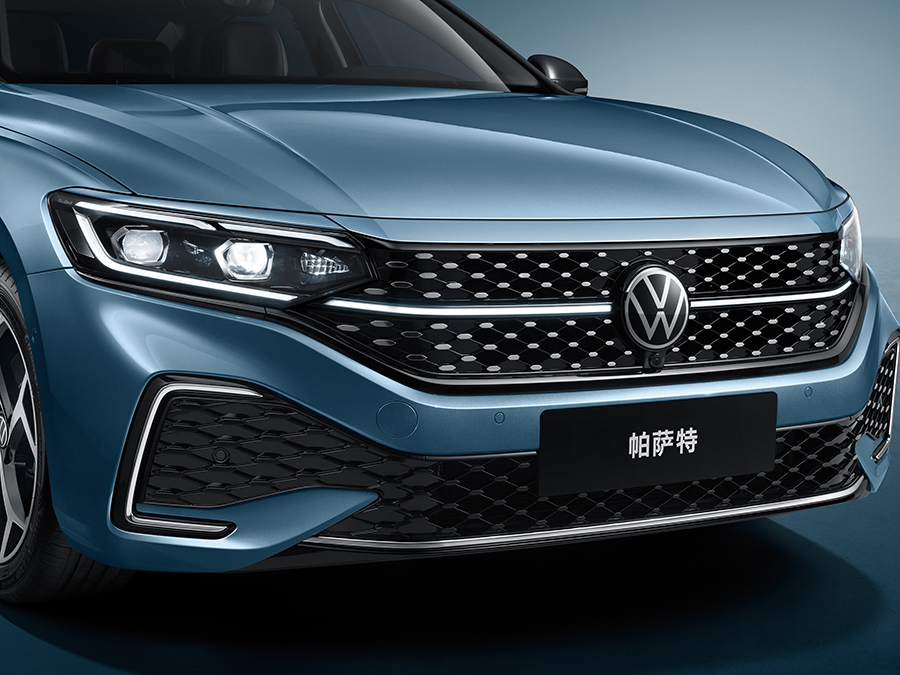
The Passat ePro avoids radical EV-inspired styling, instead retaining the mature, dignified B-segment proportions of the MQB Evo platform. Its front fascia keeps the horizontal chrome bars and贯穿-style LED daytime running lights, while the grille features a blue gradient texture and aerodynamic closed-off details. New exclusive colors like Galaxy Blue and Lake Light Blue join the lineup, paired with low-drag wheels and flush door handles — quietly signaling its electrified identity without shouting. Compared to the gasoline model, only the ‘ePro’ badge and charging port cover offer immediate visual distinction — it speaks through quality, not exaggeration.
Powertrain: From ‘Gas-to-Electric Retrofit’ to Purpose-Built Hybrid
What truly transforms the Passat ePro is a complete powertrain overhaul. It ditches the transitional 1.4T + DQ400e setup of earlier models and now pairs the EA211 1.5T Evo2 high-efficiency hybrid engine with a P1+P3 coaxial dual-motor layout inside the TQ251 transmission — forming one of the industry’s rare 3-speed DHT hybrid systems. This isn’t just a motor grafted onto an ICE platform; it’s a dedicated hybrid architecture deeply optimized for intelligent energy flow management.
Real-world testing confirms: CLTC pure-electric range reaches 157 km — sufficient for most urban commutes; full-charge/full-tank range hits 1,468 km, with a mere 3.6 L/100 km fuel consumption in charge-depleting mode — and it runs on regular 92-octane gasoline. For families, that means significantly lower monthly electricity + fuel costs than comparable gasoline sedans, without the range anxiety of pure EVs. Crucially, the 3-speed DHT delivers clear advantages during highway re-acceleration and sustained uphill climbs — offering linear, seamless power delivery, fully overcoming the common early-PHEV weakness of ‘smooth at low speeds, sluggish at highway speeds’.
Intelligence: A Sudden ‘Awakening’ in the Joint-Venture Camp
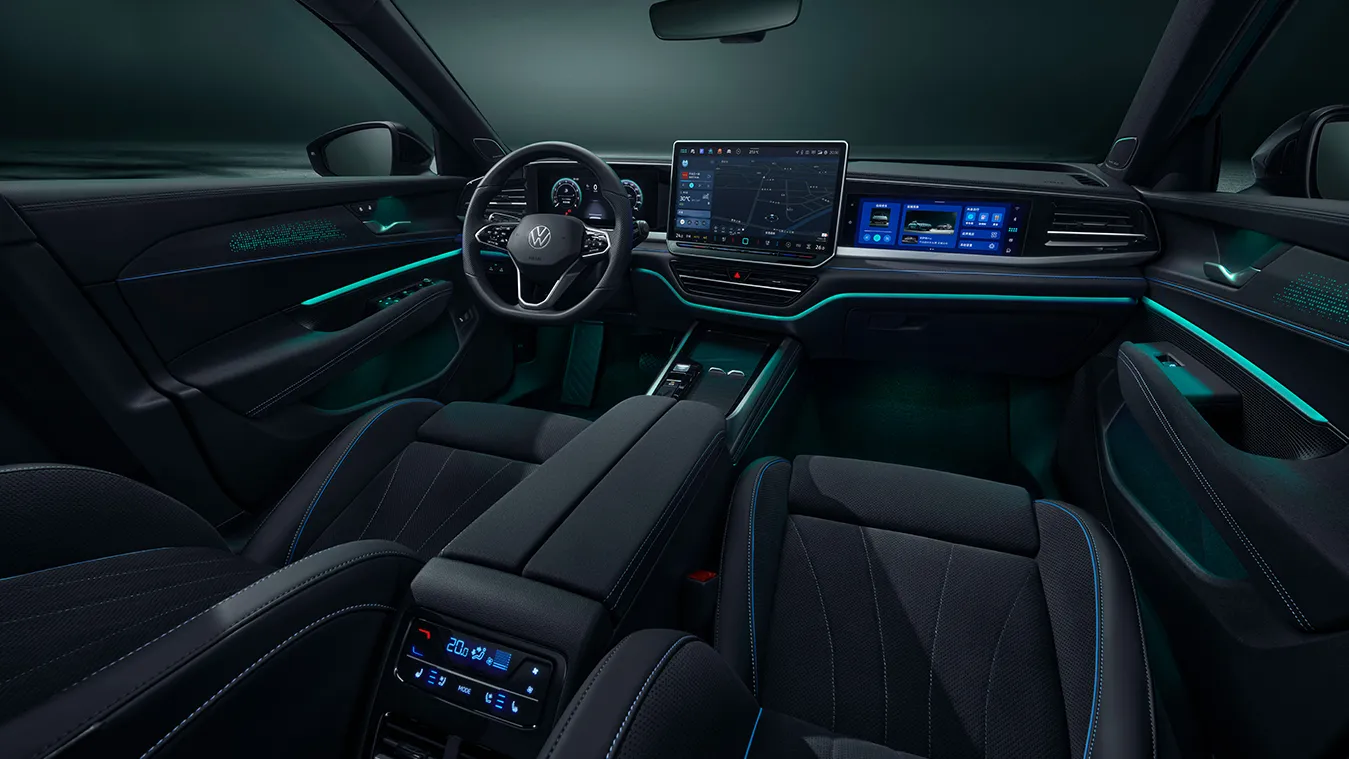
If the powertrain is the Passat ePro’s hard-core strength, its cabin tech and driver assistance represent its earnest response to the new era. The entire lineup comes standard with Qualcomm Snapdragon 8155 chips, a 15-inch floating central touchscreen, and a front passenger entertainment screen — forming a three-screen interactive system. Its UI is intuitive, and voice recognition leverages dual AI large models, delivering responsiveness and semantic understanding far beyond traditional joint-venture standards.
The IQ.Pilot L2+ advanced driver assistance system covers highway NOA navigation assist, automated lane changes, and memory parking — among other high-frequency functions. While urban NOA remains unavailable, its highway performance — including adaptive cruise stability and curve-centering capability — already approaches mainstream NEV levels. Notably, its sensor suite includes five millimeter-wave radars, twelve ultrasonic sensors, and one high-definition forward-facing camera — offering solid hardware redundancy and ample headroom for future OTA upgrades.
Chassis & Driving Dynamics: German Engineering Remains an Unbeatable Moat
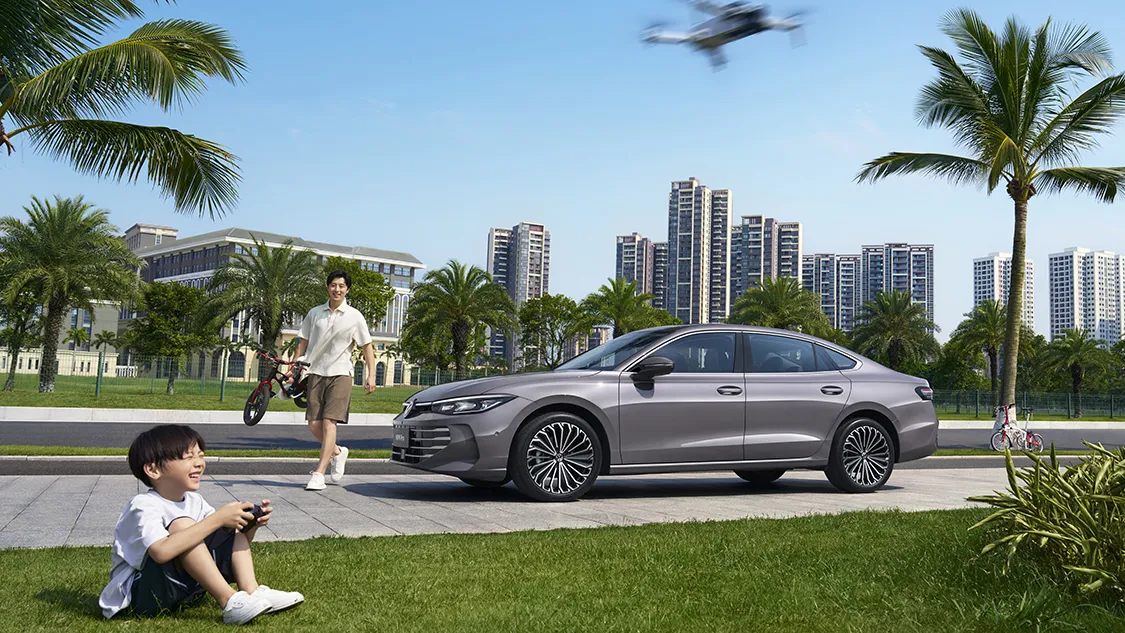
During real-world testing on winding mountain roads across Anhui and Zhejiang provinces, the Passat ePro impressed with reassuring chassis composure: MacPherson struts up front and multi-link independent suspension at the rear — tuned by German engineers — deliver well-controlled body roll in corners and composed damping over successive bumps. At 120 km/h on the highway, the car remains stable and taut, with zero sense of looseness. That ‘substantial yet agile, stable yet responsive’ driving feel remains a soft skill that domestic NEVs — despite generous hardware investments — struggle to replicate quickly.
Yet it honestly retains some traditional hallmarks — notably, front-wheel drive across the lineup. For daily commuting and business use, FWD offers practical space utilization and cost control — perfectly reasonable. But if you crave RWD agility or enhanced wet/snow traction, the Passat ePro makes no such leap. Likewise, its 50 kW DC fast-charging capability meets basic needs but lags behind the 150 kW+ norm among peers — a deliberate, conservative choice.
Pricing & Buying Advice: The ¥187,900 Luxury Trim Is the Sweet Spot
- Business Trim (¥169,900): Meets core PHEV needs but omits heated seats, power driver’s seat, and key IQ.Pilot features — best suited for budget-constrained commuters;
- Luxury Trim (¥187,900): Significant upgrade — adds front seat heating/ventilation, 12-speaker Harman Kardon audio, panoramic sunroof, and full L2+ ADAS functionality — outstanding value;
- Flagship Trim (¥203,900): Adds rear seat heating, HUD head-up display, and 30-color ambient lighting — premium touches with modest ROI, ideal for users prioritizing executive comfort.
Worth noting: the Passat ePro inherits the gasoline model’s spaciousness — its 2,871 mm wheelbase ensures generous rear legroom and plush executive-grade seat cushioning. However, the raised center tunnel remains, limiting comfort for the middle rear passenger in five-seat configuration — a physical compromise inherent to the MQB platform, unlikely to be resolved soon.
Conclusion: Not a Disruptor — But a Pragmatic Evolver
The Passat ePro isn’t a spec-sheet ‘overachiever’ trying to crush rivals on paper. Instead, it’s a seasoned veteran who deeply understands real Chinese family needs: it packages German chassis tuning, proven reliability, comprehensive after-sales support, and practical PHEV technology into a compelling offer starting at ¥169,900. It doesn’t hide its FWD layout, doesn’t chase ultra-fast charging, and doesn’t eliminate the center tunnel — yet delivers rock-solid everyday strengths: smooth power delivery, class-leading fuel efficiency, and unwavering high-speed stability.
If you need a B-segment PHEV sedan that balances daily commuting, occasional business use, and long-term peace of mind — the Passat ePro answers with quiet sincerity. It may not dazzle, but it earns trust — and in today’s increasingly discerning NEV era, ‘reliability’ itself has become a rare and precious quality.
Comments
0 commentsNo comments yet. Be the first!
Post Comment