
At the 2026 Chengdu International Automobile Exhibition, the Cadillac XT5 PHEV made its official debut. As the brand's first plug-in hybrid mid-to-large SUV built on the Ultium platform, pricing and launch timing remain unannounced — but it will feature a 1.5T engine paired with a dual-motor PHEV system, a 35.5 kWh nickel-cobalt-manganese (NCM) battery, and Momenta's R7 world model for intelligent driving.
The exterior design carries over styling cues from the current XT5 gasoline version: the front fascia retains the iconic shield Integra grille with a mesh texture, complemented by a split LED headlight assembly. A roof-mounted LiDAR unit enhances hardware redundancy for advanced intelligent driving. Side profile features conventional door handles and multi-spoke wheels, while gloss-black window trim adds refinement. The rear employs a chrome strip connecting the T-shaped taillights horizontally, plus a rear spoiler; exhaust outlets are now fully hidden to de-emphasize powertrain type.
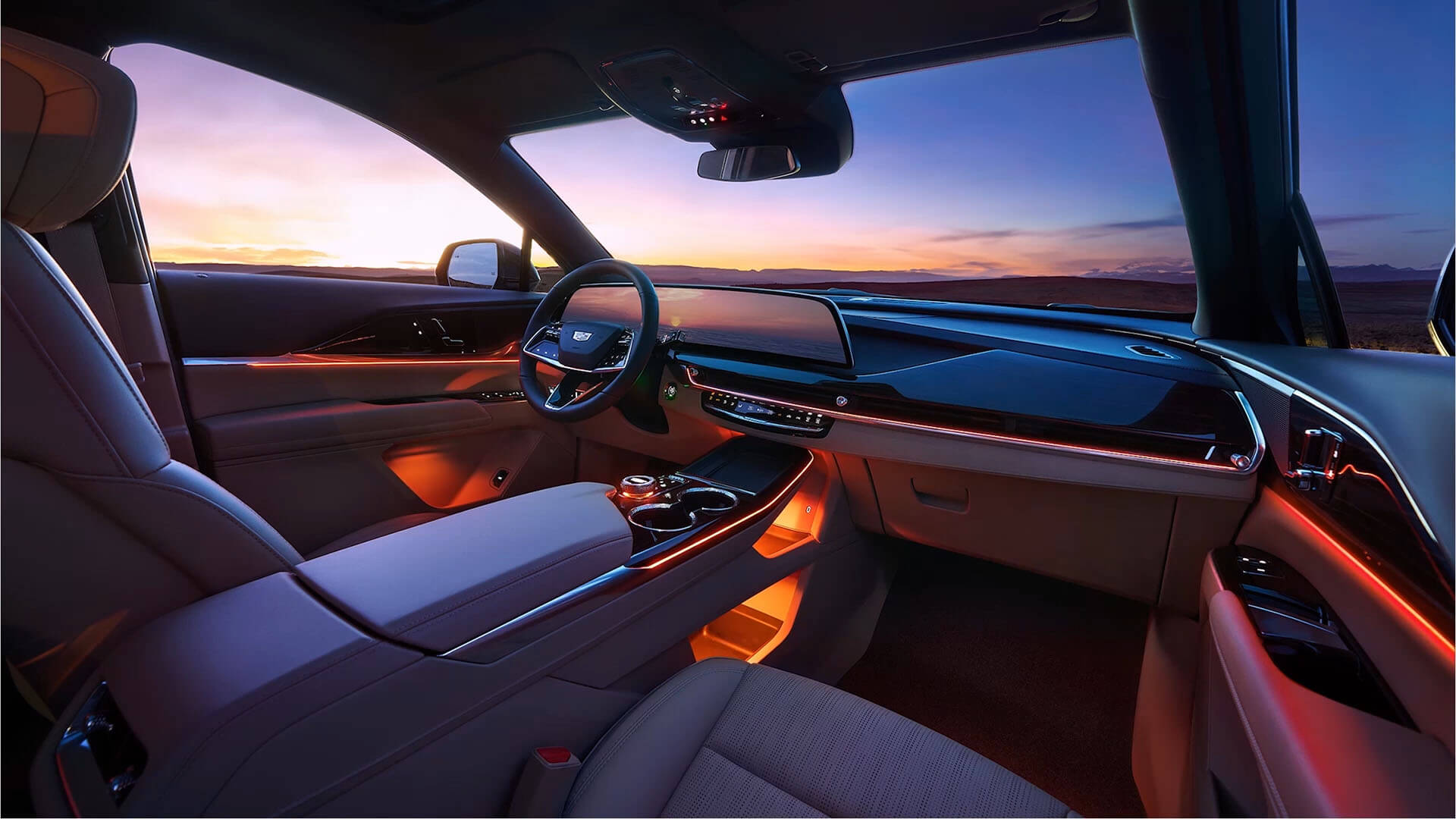
Dimensions measure 4888 × 1957 × 1685 (1688) mm, with a 2863 mm wheelbase — positioning it firmly in the mid-to-large SUV segment. The interior continues the curved dual-screen layout (fully digital instrument cluster + central infotainment display), paired with a three-spoke multifunction steering wheel. The center console adopts a two-tier, two-tone structure; the center console area includes a wireless charging pad, dual cupholders, and dedicated physical control knobs — emphasizing tactile feedback and scenario-aware human-machine interaction.
The powertrain combines a 1.5T engine (max output: 115 kW) with front and rear electric motors (max outputs: 160 kW and 110 kW respectively), mated to a 35.5 kWh Ultium 5C NCM battery. WLTC all-electric range is rated at 155 km, with a WLTC combined fuel consumption of 6.05 L/100 km. Underpinning the vehicle is a full-terrain Electric Hummingbird chassis, supporting multi-mode adaptive damping and ride-height adjustment.
On the intelligent driving front, the Cadillac XT5 PHEV ranks among the first production vehicles globally to adopt Momenta's R7 world model. Unlike conventional perception-and-recognition systems, R7 interprets physical object properties, motion causality, and interaction possibilities — enabling more physically grounded trajectory prediction and strategic planning in complex scenarios such as rush-hour commuting, narrow-road passing, path-tracing reverse maneuvers, and automated parking.
Comments
0 commentsNo comments yet. Be the first!
Post Comment