
BMW is betting heavily on its highly anticipated Neue Klasse (New Class) all-electric platform to reverse two consecutive years of declining sales in China. Yet by the time its first Neue Klasse model designed specifically for the Chinese market — the iX3 SUV — is scheduled to launch in November 2026, the technological pace and user preferences of China's EV market will have undergone profound shifts.
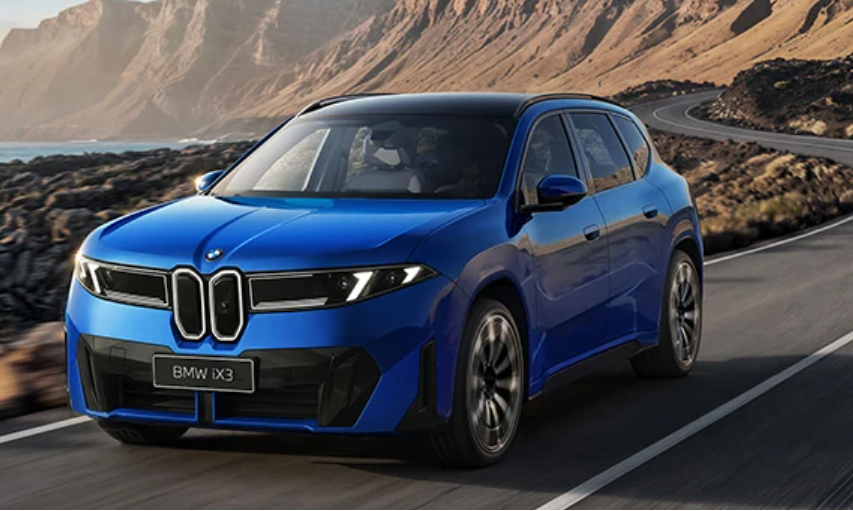
According to official data released by BMW, its Q2 2026 sales in China plunged 30% year-on-year. Shortly after assuming office, new CEO Milan Nedeljković issued a profit warning, citing weak performance in China as a key factor — this marks the third such warning from BMW in three years.
Zhang Junyi, General Manager of Shanghai-based consultancy Automotive Foresight, noted: "Had this vehicle launched two years earlier, it might have been a game-changer — but in today's Chinese auto market, it's unlikely to stand out." Meanwhile, domestic NEVs like NIO ET9 now demonstrate intelligent suspension tuning through vivid, scenario-based stunts — such as driving over speed bumps with champagne glasses stacked on the roof. Brands including Xiaomi and Zeekr are also slashing full-vehicle development cycles to around 18 months — roughly half that of traditional automakers — to keep up with rapid intelligent feature iteration.
Data shows that in H1 2026, BMW's battery-electric vehicle (BEV) share of total China sales stood at just ~5%, far below the national new-energy vehicle penetration rate of 46%. During the same period, Mercedes-Benz and Audi saw sales decline 28% and 19%, respectively, in China. Wang Xianbin, Deputy Director of Gasgoo Research Institute, bluntly stated: "Chinese consumers no longer buy into the 'German engineering heritage' narrative."
Notably, BMW iX3's China launch was delayed due to a strategic shift in its ADAS solution: BMW ultimately abandoned its in-house system in favor of driver-assistance technology supplied by Chinese partner Momenta. BMW emphasized that the decision responds directly to local users' strong demand for advanced intelligent driving features — and reaffirmed its commitment to "rigorous, end-to-end safety testing" throughout development.
Yet multiple industry observers argue that price cuts and technology outsourcing alone cannot resolve the underlying crisis. LandRoads Consulting data reveals that BMW's average transaction price in China reached RMB 341,000 in 2025 — lower than premium domestic brands NIO, AITO, and DENZA. Wang Xianbin added: "Product definition remains heavily centralized at Munich headquarters, resulting in clear lag in understanding real Chinese user needs."
Comments
0 commentsNo comments yet. Be the first!
Post Comment