
Design: Flagship SUV Presence & Intelligent Driving Hardware Stack
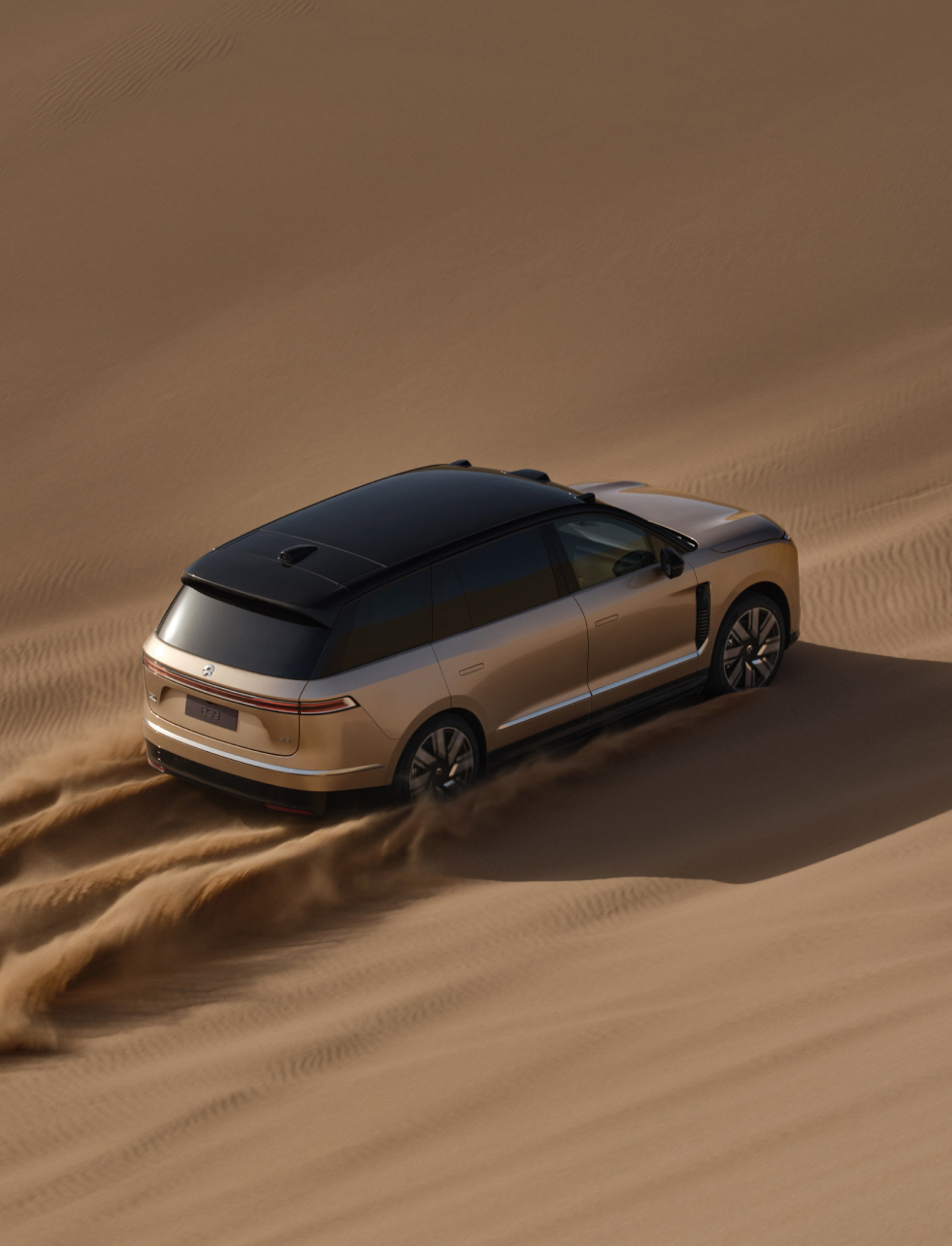
The 2026 NIO ES9, as the brand's flagship SUV, retains the family design language but refines it with greater restraint and gravitas. Its beige body paired with champagne-gold headlights exudes a calm yet tech-forward visual tension against the desert highway backdrop — a stylistic choice that subtly mirrors the intelligent driving system's underlying confidence.
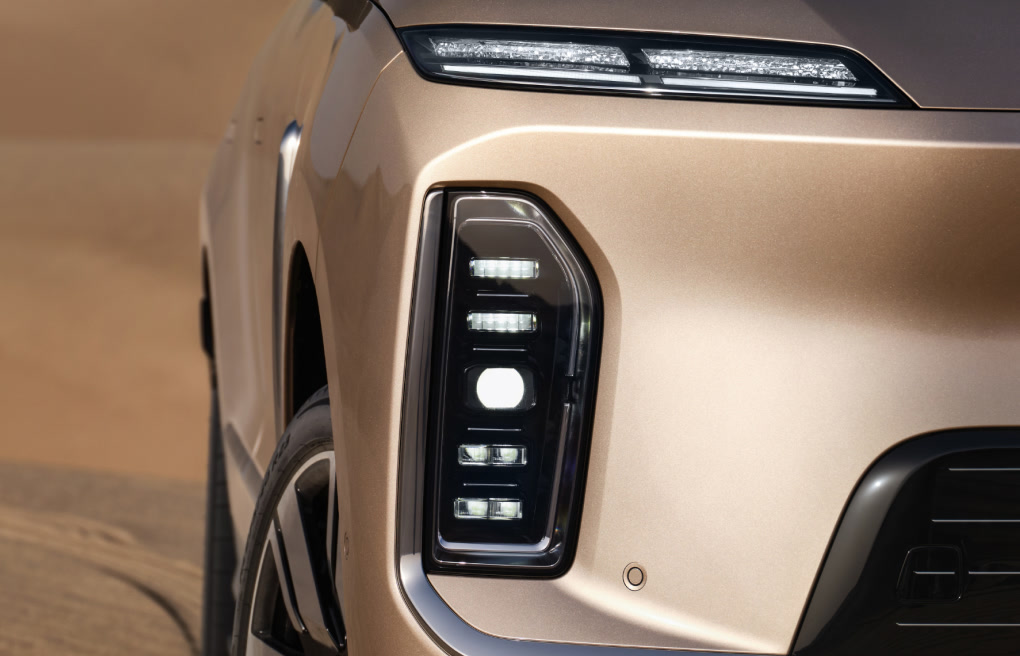
On the hardware side, the ES9 is equipped with two Nirvana chips (combined computing power ~2000 TOPS), three LiDAR units, and dual blue-light perception modules — significantly higher hardware redundancy than its predecessor. This "hardware stacking" isn't for show; it provides a robust computational foundation for World Model 2.5 — especially critical in complex, dynamic rush-hour scenarios where multi-sensor fusion stability becomes a decisive factor.
Intelligence: World Model 2.5's Confidence — and Its Fluctuations
The test route covered the classic evening rush-hour "Qingbei Line": 50 kilometers total, spanning 20 high-difficulty scenarios including unprotected left turns, tidal lanes, spiral ramp merges, narrow-road passing, three-point U-turns, and underground garage entry/exit. The ES9's World Model 2.5 demonstrated clear evolution:
- More decisive decision-making: At the same unprotected left-turn intersection where the ES8 previously hesitated repeatedly, the ES9 executed a smooth, proactive maneuver — moving while observing, with no redundant steering inputs;
- Smother trajectory planning: Evasive maneuvers respond faster; lane borrowing is bolder and more assertive; lane changes are light, precise, and noticeably improve traffic flow efficiency in congestion;
- Finer-grained perception: Enhanced Vision-Language Modeling (VLM) enables clear identification of tidal-lane direction markings and seamless, uninterrupted autonomous transitions when entering or exiting gated communities;
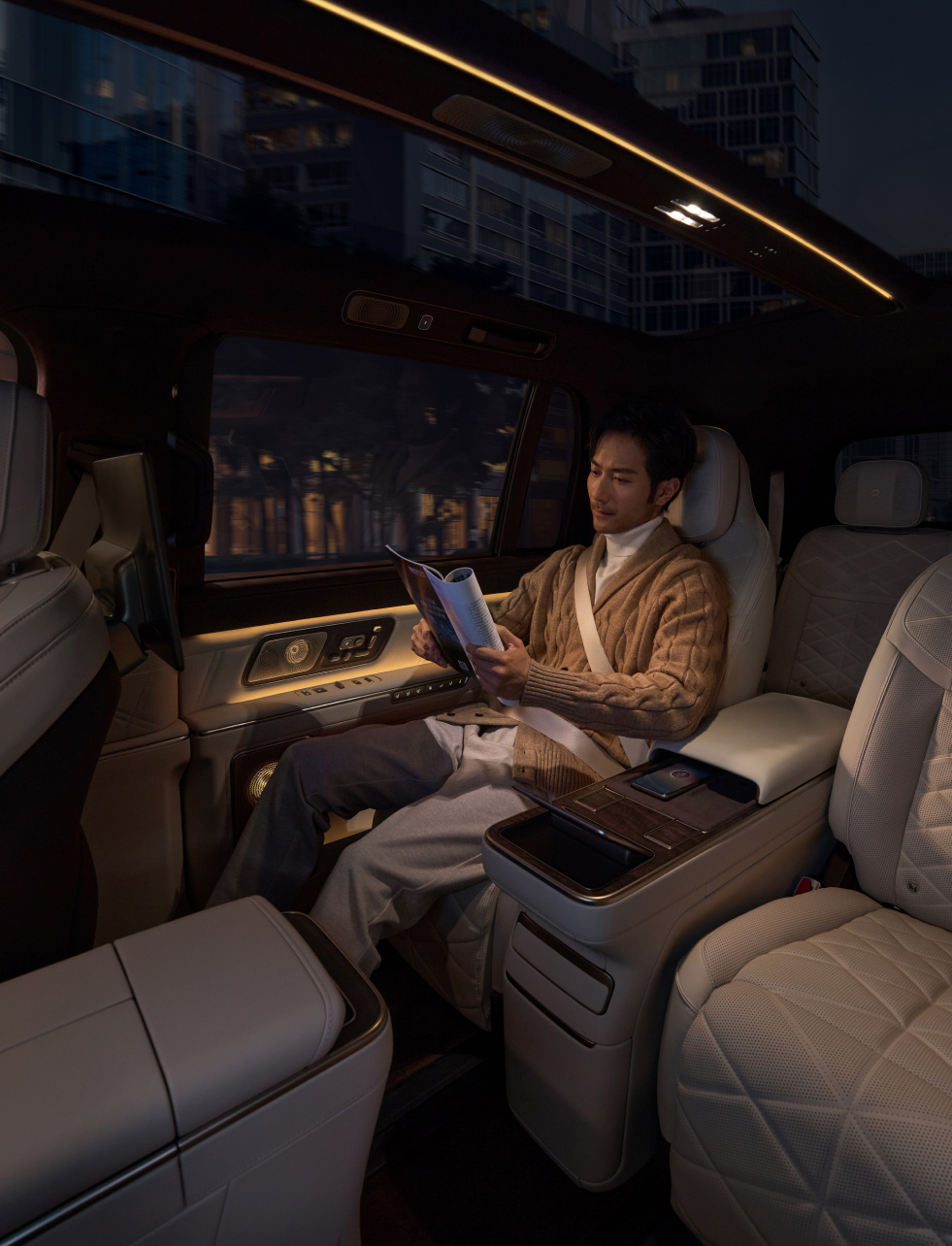
- More composed vehicle control: Coupled with the fully active suspension, acceleration feels gentle and braking linear; vertical motion is significantly suppressed — ride comfort under intelligent driving closely resembles that of a city high-speed rail train.
Yet progress comes with notable shortcomings: Among 10 manual interventions, one posed a safety risk (brushing a concrete barrier), one violated traffic rules (entering a bus-only lane), and one involved a serious path error (crossing solid lines during a U-turn). Other issues included inconsistent logic during three-point U-turns, three failed extrication attempts on an extremely narrow road (just 2.7 m wide), hesitation at roundabout entrances, and misjudged lane borrowing that intercepted an exiting vehicle in a garage. As NIO's Vice President of Intelligent Driving Ren Shaoqing noted, long-tail scenarios — particularly those where "humans yield, but no training data exists" — remain blind spots in model training.
Powertrain & Chassis: A "Business Philosophy" Designed for Intelligent Driving
The ES9 doesn't emphasize raw performance specs. Instead, power delivery and chassis tuning are deeply optimized for intelligent driving refinement: restrained throttle response, progressive lift-off deceleration, and refined steering feel — all complemented by the Skyline chassis's strong suppression of roll and pitch. This ensures stable vehicle posture across complex road conditions. This philosophy — "not the fastest, but the most stable" — stands in sharp contrast to mainstream intelligent driving systems prioritizing aggressive responsiveness. It's not about driving hard — it's about driving with reassurance.
Pricing & Upgrade Timeline: Legacy Owners Await July
World Model 2.5 has been rolled out to all ES9 users. According to reports, older L60 and L90 models will also receive this update — though due to chip compute limitations, rollout is expected in July 2026, with slightly reduced functionality. For ONVO users with non-LiDAR-equipped versions, no official upgrade path has been announced at this time.
Conclusion: A Significant Leap in Usability — But Not Yet "Hands-Off" Trust
NIO's World Model 2.5 represents a substantial, grounded iteration: it elevates the ES9's usability in most urban high-frequency scenarios, delivering tangible improvements in driver confidence, operational smoothness, and ride quality. However, in narrow-road navigation, extreme U-turns, and sudden obstacle response — classic long-tail cases — the system still exhibits noticeable instability and logical gaps.
It's no longer just a "functional-enough" ADAS tool — it's beginning to shoulder expectations of genuine trustworthiness. That trust, however, still requires more real-world road data and algorithmic refinement to solidify. For NIO, World Model 2.5 isn't the finish line — it's the pivotal step from "capable of driving" toward "safe to let go".
Comments
0 commentsNo comments yet. Be the first!
Post Comment