
Design: A Rugged Silhouette Reinvented for EVs
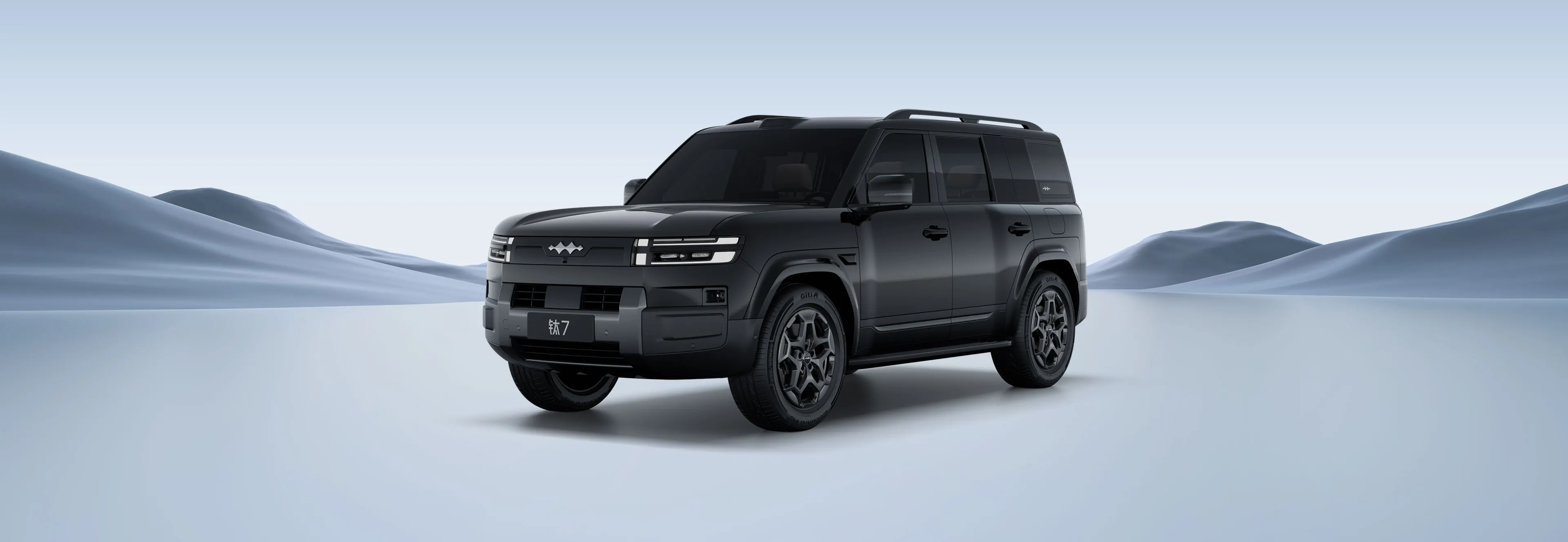
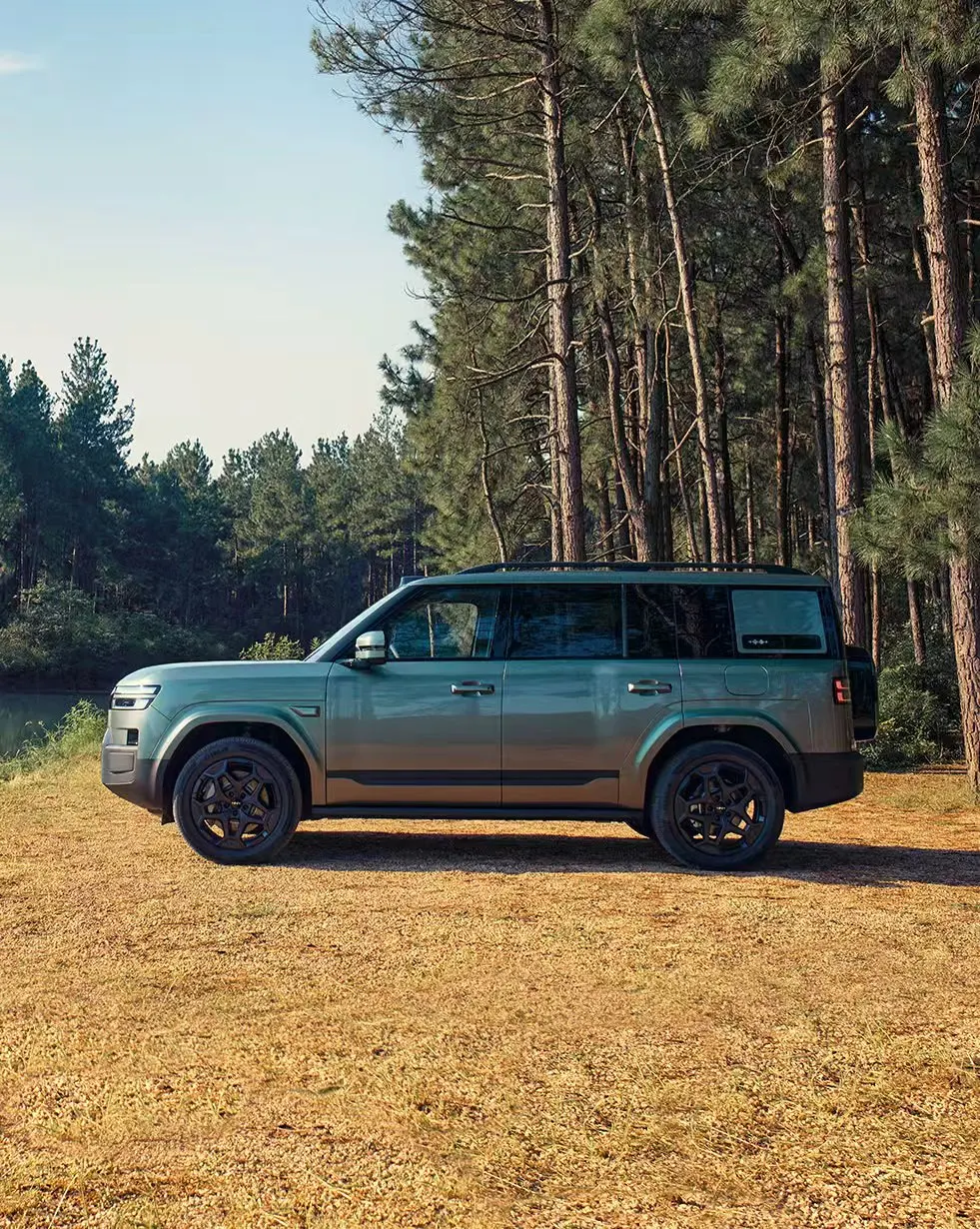
The 2026 Fangchengbao Ti7 EV retains the family's signature mecha-inspired styling — sharp, boxy lines; flared wheel arches; short overhangs; and elevated ground clearance — preserving the muscular presence of a rugged SUV. Unlike the plug-in hybrid variant, however, the EV version eliminates engine-bay redundancy, adopting a sealed front fascia complemented by a full-width LED light bar and sculpted angular accents — delivering tech-forward sophistication with restrained confidence. Its side profile is taut and compact, with a sharply raked D-pillar; the rear emphasizes width via horizontal lighting and an illuminated logo. In all-black livery against a backdrop of azure skies and mountain ranges, it projects quiet authority — not flash, but gravitas.
Powertrain: Rear-Wheel Drive Single Motor — Strong Off-the-Line, Thermal Management Questioned
The Ti7 EV features a single-motor, rear-wheel-drive system producing 408 hp and 365 N·m of torque, with a curb weight of 2.5 tons. With ESC disabled and Sport mode engaged, its best 0–100 km/h sprint was 7.26 seconds; the tenth run slowed to 7.63 seconds — indicating mild thermal attenuation. Mid- and high-speed acceleration remains impressive: 40–80 km/h takes just 3.02 seconds; 80–120 km/h, only 3.25 seconds — outperforming most rival single-motor EV SUVs in sustained output. Yet the delivery lacks explosive thrust; throttle response is linear and calibrated for composed, not aggressive, driving.
Intelligence: DiSus-C Is Both the Highlight — and the Limitation
The standard-fit DiSus-C active suspension system is the standout feature of this test. It's not conventional air suspension, but rather electromagnetic dampers that actively suppress pitch motions (e.g., brake dive or launch squat). In 'Strong' mode, body control during braking and acceleration improves markedly — but lateral support remains modest. Over consecutive undulations or in sustained corners, noticeable body roll persists, revealing limited intervention in lateral dynamics. During slalom testing, initial turn-in is light and responsive, but under load, longer damper travel induces pronounced understeer and delayed dynamic response. The moose test result stands at 72.0 km/h: electronic aids intervene early but conservatively — by the time the vehicle enters Zone C, speed has already dropped to ~40 km/h. Safety is assured; driver confidence at the limit is not.
Range & Charging: CLTC Rated at 755 km, Real-World 651 km — Flash Charging Delivers
Powered by a 105 kWh lithium iron phosphate (LFP) battery, the CLTC-rated range is 755 km. Using standardized protocols on Beijing's 5th Ring Road (outer loop) — with Eco mode, strong regen, and 23°C auto AC — we recorded a real-world range of 651 km and an average consumption of 17.22 kWh/100 km. This places it mid-to-lower tier among comparable single-motor EV SUVs. Charging performance shines: using a 120 kW DC charger, 0–100% replenishment consumed 112.108 kWh and took 59 minutes; 30–80% required just 28 minutes. Notably, charging power remained stable near 120 kW even above 90% state-of-charge — demonstrating robust BMS thermal management and platform-level battery compatibility.
Cabin & Ride Comfort: Practicality First, Refinement Second
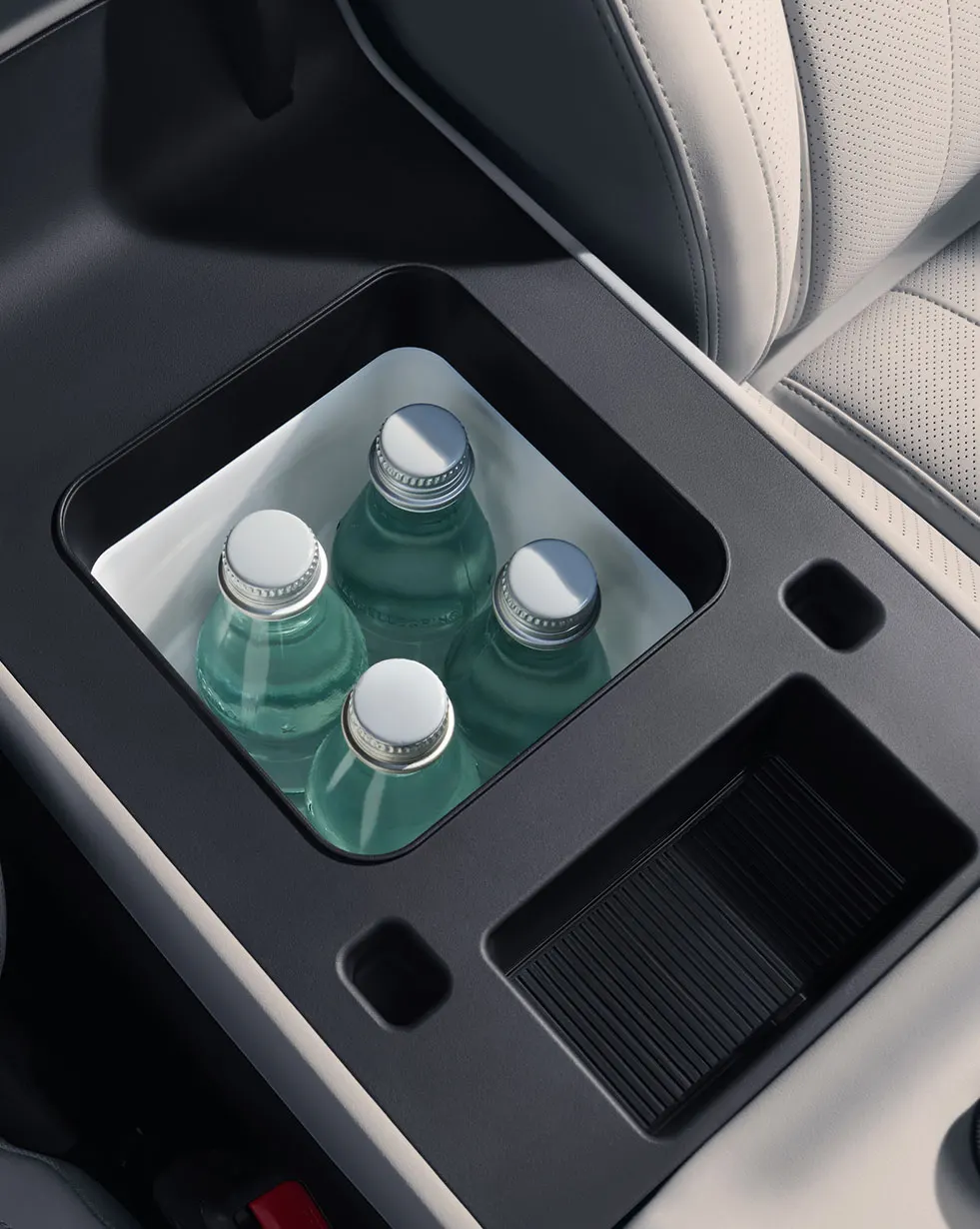
The interior carries forward FANG CHENG BAO's no-nonsense, functional minimalism. The center console offers intuitive layout and generous storage — three bottled waters fit neatly inside the armrest bin in our photos, underscoring everyday usability. However, materials and build quality fall short of premium benchmarks: some trim gaps are slightly loose, and touchscreen responsiveness occasionally lags. NVH is acceptable at low-to-mid speeds; wind noise dominates above 90 km/h, while road noise stays well-contained — though tire roar is faintly perceptible. Seats offer solid support and low fatigue on long drives, yet rear legroom suffers slightly due to battery pack height — making it marginally less spacious than similarly sized ICE SUVs.
Pricing & Positioning: Official Price Still Unannounced
As of April 2026, the Fangchengbao Ti7 EV 755 km RWD Flash-Charging Edition has yet to disclose official pricing or launch timing. Positioned between urban commuting and light off-road use, its target buyer values mechanical integrity and rapid refueling — while accepting moderate trade-offs in handling agility. As Ti7's first all-electric model, it serves primarily as a technology validation platform and market probe — not a direct competitor to mainstream EV SUVs like Model Y or AITO M7.
Verdict: A Rational Choice, Powered by DiSus-C
The Fangchengbao Ti7 EV isn't engineered for headline-grabbing performance or AI-driven novelty — it's a grounded, scenario-driven execution of EV fundamentals. With dependable flash-charging capability, credible DiSus-C posture control, and a respectable 86.2% CLTC range realization, it directly addresses core user needs for an 'anxiety-free electric SUV'. Its limitations — modest dynamic limits, relatively high energy consumption, and unremarkable smart interaction — remain clear. Should its final pricing prove competitive, it may well appeal to pragmatic buyers who value rugged aesthetics and real-world usability over cutting-edge flair: unexciting, yes — but capable. Uncompromising? No. Trustworthy? Absolutely.
Comments
0 commentsNo comments yet. Be the first!
Post Comment