
Design: Balancing Ruggedness and Practicality Under 'Fangding' Aesthetics
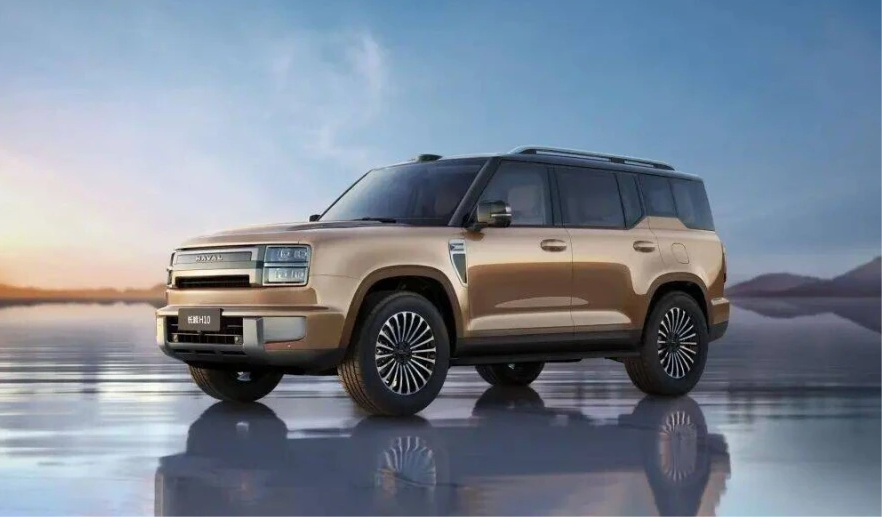
As Great Wall Motor's all-new box-shaped SUV, the H10 adopts the proprietary 'Fangding' (Square Cauldron) design language — its bold, angular silhouette delivers instant visual recognition. The six-seat variant tested here measures 5,299 mm in length and nearly 2 meters in width, with a curb weight exceeding 2.5 tons. Such imposing dimensions would normally feel unwieldy on the narrow, winding Panlong Ancient Road in southern Xinjiang — but its real-world performance defied expectations.
Powertrain: Second-Generation Hi4 PHEV System Overcomes High-Altitude Power Loss
At an elevation of 4,200 meters on the Pamir Plateau — where thin air severely saps conventional gasoline engine output — the GWM H10's second-generation Hi4 plug-in hybrid system sidesteps this classic limitation. Comprising a 1.5T engine plus front and rear dual motors, it employs a dual-motor AWD architecture that eliminates the traditional driveshaft — delivering more direct power response and higher transmission efficiency.
Mated to a 4-speed DHT transmission, its calibration prioritizes everyday efficiency: high gears dominate on paved roads to minimize fuel consumption; off-pavement, drivers can engage low-range 1st gear — emulating the 4L low-range mode of hardcore off-roaders — to multiply torque and enhance traction. Its CLTC combined range reaches 1,404 km, with a CLTC all-electric range of 232 km — seamlessly bridging daily EV commuting and long-haul, anxiety-free travel.
Intelligence: Standard Lidar, Steady but Refinable ADAS
The H10 comes standard with lidar sensors across all trims, backed by a total of 27 high-precision sensors. Its intelligent driving system has already been validated in multiple Tank and HAVAL models. During our test drive, it performed reliably on open national highways, provincial roads, and mountain passes — maintaining smooth adaptive cruise control and executing lane changes confidently. However, it struggled to accurately detect non-standard traffic signals like temporary stoplights. On the slow, hairpin bends of the Panlong Ancient Road, the system conservatively reduced speed for safety — slightly compromising driving efficiency. Future support for human–machine co-driving (allowing minor steering or throttle inputs without disengaging the system) could significantly improve low-speed cornering experience.
Chassis & Off-Road: Body-on-Frame-Inspired Structure for Comfort and Rigidity
The H10 uses a unibody structure reinforced with an integrated subframe — a design borrowed from ladder-frame philosophy — combined with strategically positioned underfloor battery packs to lower the center of gravity. Its front double-wishbone and rear five-link independent suspension are paired with EDC electromagnetic dampers and road-preview systems. On rough, pockmarked surfaces, ride comfort is refined and vibration is well-damped; even in Comfort mode, the suspension absorbs bumps smoothly over unpaved terrain.
Though it lacks air suspension, the H10 offers 220 mm of ground clearance, seven drive modes (Eco, Comfort, Sport, plus Snow, Mud, Sand, and 4WD), iTVC torque vectoring control, and an electronically controlled mechanical rear differential lock — enabling capable light-to-moderate off-road performance. The six-seat version features a 25° departure angle and 24° approach angle, with a rated wading depth of 600 mm. An in-car interface also displays real-time pitch, roll, and altitude data for off-road navigation.
Pricing & Outlook: Pre-sales Imminent — Final Pricing Awaits
No official pricing for GWM H10 has been announced yet, though pre-sales are expected to launch shortly. Positioned as a mid-to-large-sized, six-seat plug-in hybrid SUV targeting both family use and light off-road versatility, the H10 has already surpassed peer expectations in extended high-altitude testing — it's no mere styling exercise, but a genuinely capable all-scenario vehicle for mountain runs, daily commutes, camping trips, and cross-country journeys.
Conclusion: Box-Shaped SUVs Needn't Be a Compromise
A deep, south-Xinjiang mountain-and-sea journey has fully dispelled external doubts about the H10 — namely, concerns over 'insufficient 1.5T power' or 'boxy styling without substance'. With its proven chassis tuning, mature plug-in hybrid system, dependable ADAS foundation, and pragmatic off-road hardware, the H10 proves that a box-shaped SUV can deliver uncompromised comfort, intelligence, and real-world roadworthiness. Once pre-sales begin, its pricing strategy may well reset the value benchmark for mid-to-large plug-in hybrid SUVs.
Comments
0 commentsNo comments yet. Be the first!
Post Comment