
Recently, Qijing Auto revealed key product details for its upcoming mid-to-large SUV — the Aistaland GT7. As the brand's flagship model, it will be among the first vehicles to feature the HuaweiHUAWEI HarmonySpace6 system and adopt the HUAWEI Qiankun ADS 5 intelligent driving solution — equipped with four LiDARs — drawing broad industry attention.
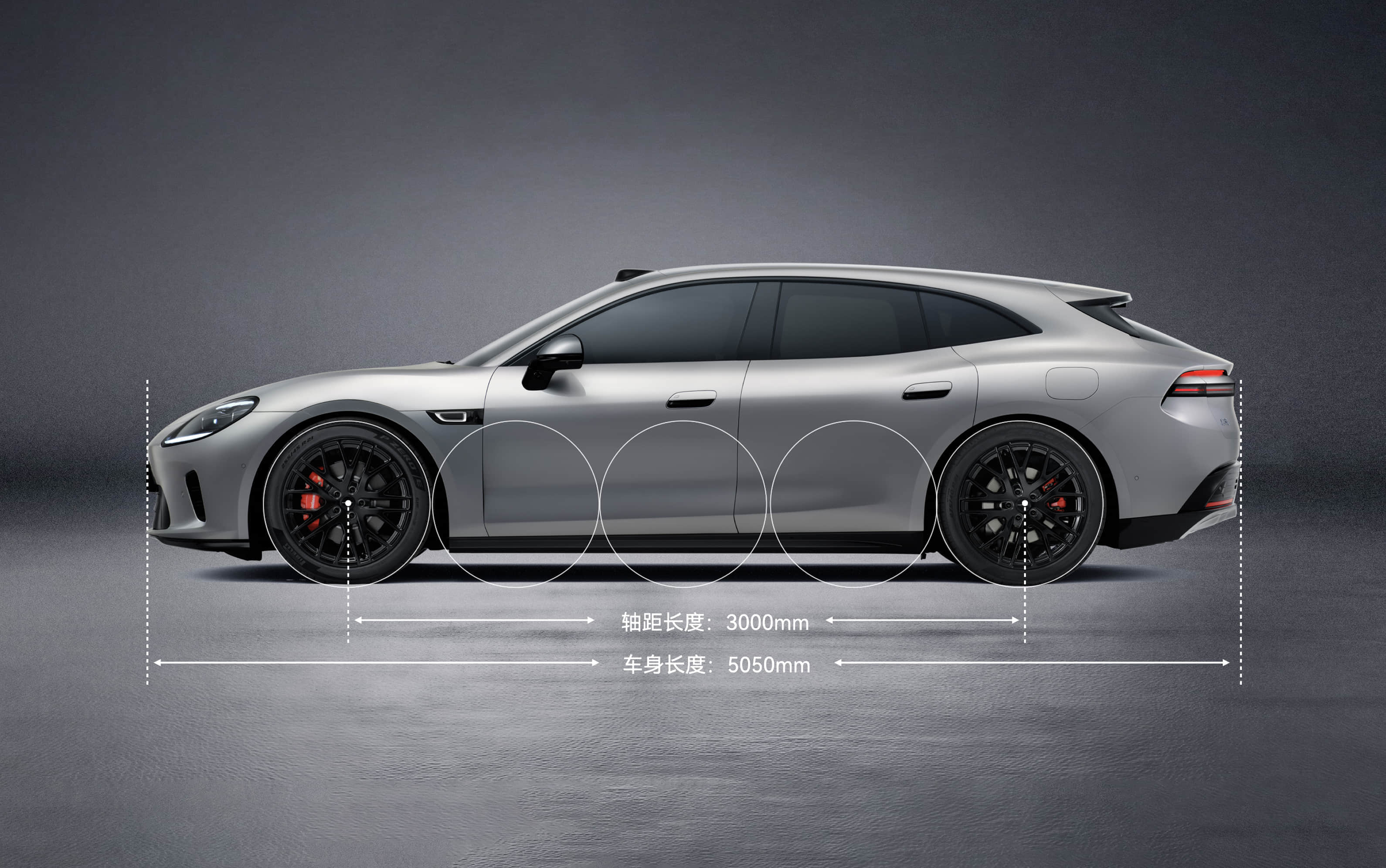
The exterior design continues the 'Youya Tension Aesthetics' language of the Qijing GT7, featuring polygonal LED headlamps and a three-section air intake for enhanced sporty identity. The vehicle is expected to debut million-pixel color smart projection headlamps and offer a front trunk. Its dimensions measure 5099 × 2006 × 1750 mm, with a wheelbase of 3070 mm — positioned as a five-seat mid-to-large SUV. Side profile highlights include semi-concealed door handles, dual six-spoke wheels, and red brake calipers; the rear retains the GT7's signature full-width tail lamp with diffuse-reflection structure, ensuring cohesive family styling.
Inside, the Aistaland GT7 adopts a dual-screen layout integrating the central console and passenger-side displays. At the core of HUAWEI HarmonySpace6 lies 'sensor fusion perception + multimodal interaction', advancing the cabin from passive response toward human-vehicle empathy. The system debuts an active child-care function: using in-cabin vision and sensors to monitor rear-seat status in real time, it can detect hazardous behaviors — such as a child extending their hand outside the window — and issue immediate alerts; it also recognizes when children fall asleep, automatically adjusting cabin temperature, audio volume, and ambient lighting.
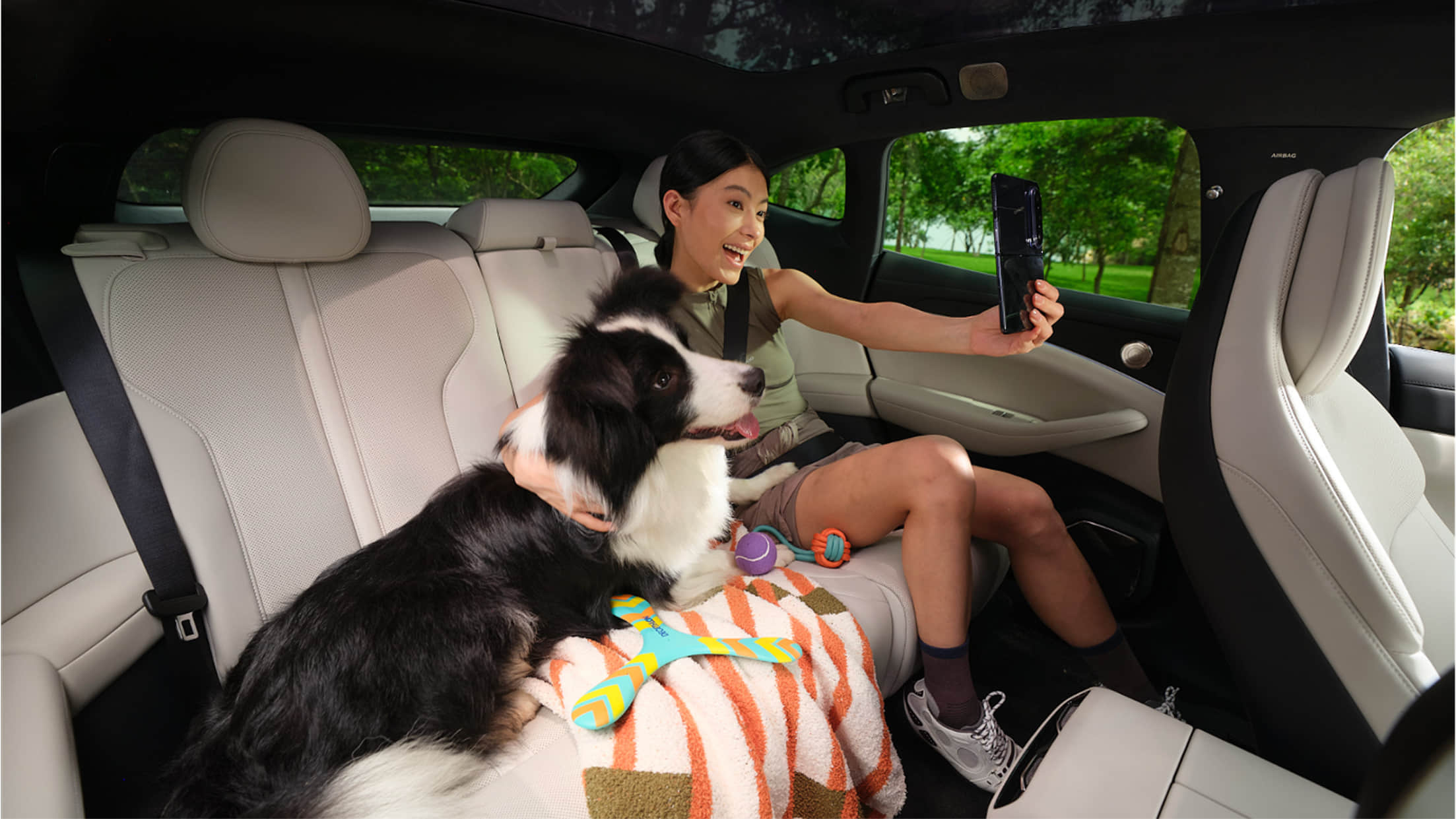
For interactive experience, HUAWEI HarmonySpace6 integrates a conversational AI agent built on the MoLA 2.0 architecture — supporting multi-dialect recognition, emotion-aware dialogue, and microphone-free karaoke. Paired with an AI Star Ring scattering module, AI-tuned audio, and real-time voice enhancement, immersion is significantly elevated. Additionally, the vehicle features a 20-second one-touch flat-folding rear seat: seat cushion, backrest, leg rest, and headrest move in unison — no need to exit the car or clear the trunk.
On intelligent driving, the Aistaland GT7 mounts the HUAWEI Qiankun ADS 5 platform, deploying a four-LiDAR setup that includes dual-optical-path, 896-line image-grade LiDARs — capable of precisely identifying a 14-cm obstacle at distances up to 120 meters. Complemented by high-precision solid-state LiDAR and distributed millimeter-wave radar, the system delivers robust detection of complex targets — including low-profile bollards, overhanging branches, and underground garage height-restriction bars — even under rain, fog, or dusty conditions — ensuring stable perception and braking response.
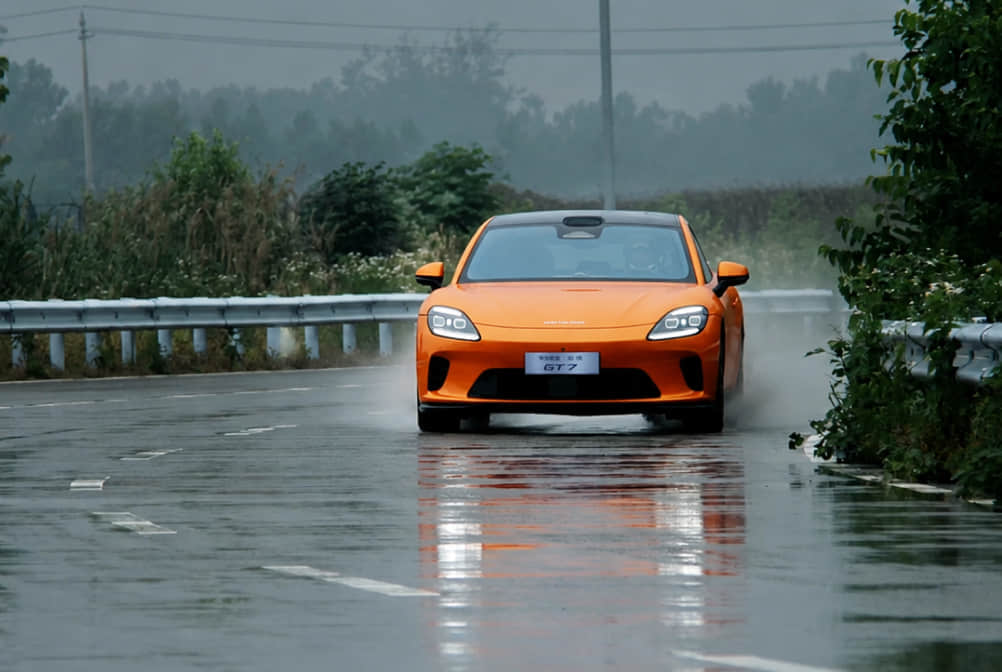
The powertrain employs a Super Extended-Range architecture, with a tri-motor setup delivering a combined peak output of 550 kW. It pairs a 67 kWh CATL Xiaoyao Super Extended-Range Hybrid Battery with 800V 5C ultra-fast charging capability, offering a CLTC all-electric range of 385 km and a CLTC combined range exceeding 1,400 km. The 0–80% recharge time is under 10 minutes. The vehicle is slated for launch in the second half of 2026, with a primary sales price band of ¥300,000–¥350,000; top-tier trims may exceed ¥400,000.
Comments
0 commentsNo comments yet. Be the first!
Post Comment