
Recently, the new BYD Qin Plus model was officially unveiled in China's MIIT vehicle registration directory. The vehicle features an all-new exterior design and — uniquely among its class — mounts a roof-mounted LiDAR sensor, signaling integration of the DiPilot 300 ("God’s Eye B") advanced driver-assistance system. This enables point-to-point navigation assistance on city streets and highways — though drivers must remain fully attentive and ready to take control at any time.
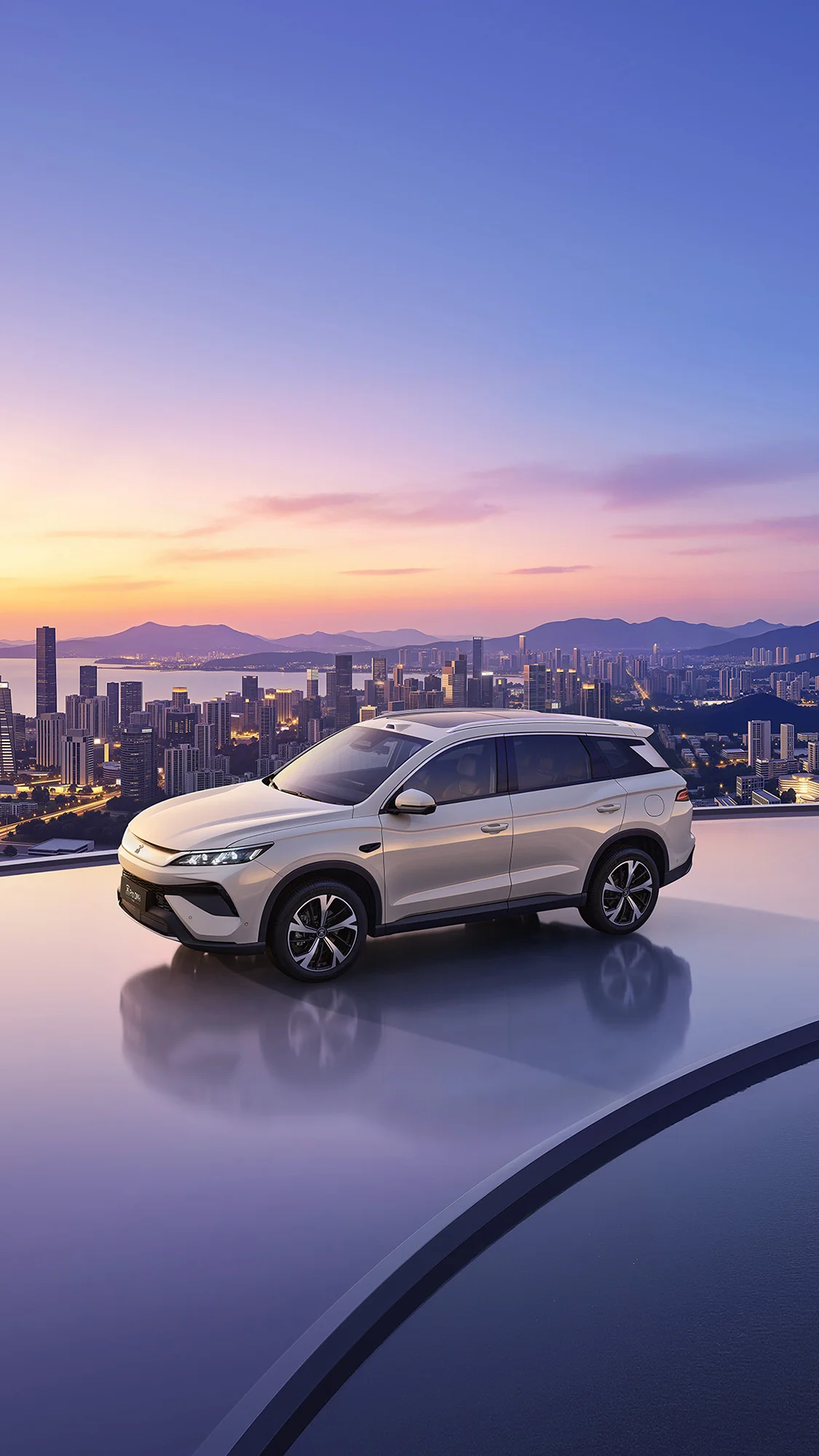
Registration documents indicate the new model will also be produced at BYD's six factories production line, potentially accelerating its mass-production timeline. As one of BYD's long-standing bestsellers, the current Qin Plus DM-i achieved record domestic sales of 480,025 units in 2024. The new model joins the larger-sized Qin L sedan in a 'dual-model strategy' — sharing highly consistent design language and platform architecture, raising the possibility of future product-line consolidation.
The new model retains BYD's signature 'Dragon Face' design language: a closed front grille, sharp LED headlights, and chrome trim connecting elements, plus physical door handles and a full-width rear light bar. Its dimensions measure 4840 × 1900 × 1498 mm, with a wheelbase of 2800 mm — increasing by 60 mm, 63 mm, 17 mm, and 82 mm respectively over the current model. Curb weight is 1610 kg; gross vehicle weight rating (GVWR) is 2005 kg. Wheel options include 16-inch and 17-inch alloys.
Powertrain remains the DM-i plug-in hybrid architecture: a 1.5L naturally aspirated engine producing peak power of 74 kW (99 hp), paired with a drive motor delivering peak power of 120 kW (161 hp). Top speed is 180 km/h. Two lithium iron phosphate (LFP) battery options are offered — 16.2 kWh and 24.3 kWh — yielding CLTC all-electric ranges of 107–160 km; fuel consumption in hybrid mode is 3.6–3.7 L/100 km.
Notably, the current Qin Plus DM-i retails from ¥79,800 to ¥99,800. Given the new model's dimensional upgrades, added LiDAR hardware, and enhanced intelligent driving capabilities, industry observers widely expect a modest price increase — but it will remain firmly anchored in the ¥100,000 mainstream family-car segment.
Comments
0 commentsNo comments yet. Be the first!
Post Comment