
The BYD Datang EV 2026 model has officially debuted, with the 'Tian Shen Zhi Yan B' intelligent driving system now standard across all trims — no optional add-on required — and backed by the 'DIDI DU DOU' assurance program.
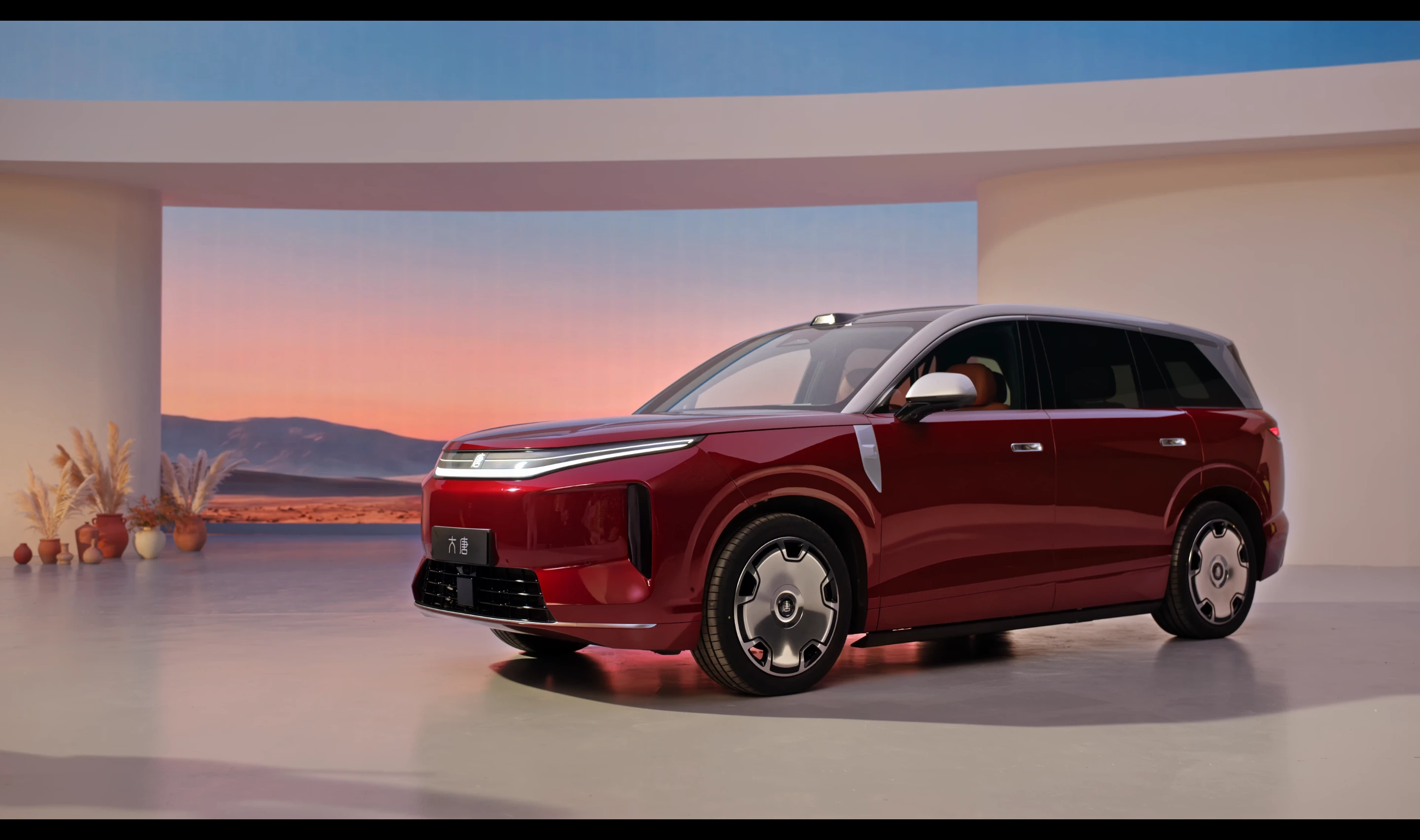
Design: Refined presence, understated yet pragmatic AD hardware
The Datang EV retains the robust proportions and Chinese aesthetic language of the BYD flagship SUV. The 2026 model features a cleaner, fully enclosed front grille and a full-width LED light strip; its red paintwork delivers striking visual impact against a sunset beach backdrop. Inside, the cabin emphasizes horizontal spaciousness, with a conventional rectangular center display — no radical shape experimentation — focused squarely on intuitive intelligent driving interaction. Notably, the roof-mounted panoramic camera unit slightly increases overall vehicle height, requiring manual intervention during under-bridge U-turns — a subtle but telling sign that this hardware platform prioritizes real-world practicality over headline-grabbing specs.
Intelligence: 20 rush-hour scenarios tested — 16 passed, 4 pending upgrade
We distilled 20 high-difficulty intelligent driving scenarios from real Friday evening rush-hour conditions in Beijing, covering core urban mobility pain points:
- Passed (16): unprotected left turns, side-road navigation, left-turn waiting zones, multi-option left turns, residential area driving, right-turn merge + consecutive lane changes + under-bridge U-turn, mixed motorized/non-motorized traffic on spiral ramps, riverside narrow roads, tidal-lane recognition, ramp merging/diverging, autonomous ETC toll passage, roundabouts beneath elevated interchanges, and main-road exit + sharp ramp bends;
- Not Passed (4): autonomous underground parking exit, park navigation, three-point turns, and autonomous underground parking entry — all explicitly attributed to current software limitations, with functionality slated for future OTA updates.
Overall, Tian Shen Zhi Yan B delivers efficient, fluid, and comfortable performance across most scenarios, inspiring strong confidence. For example: it proactively slows for an e-bike approaching from the right during unprotected left turns; gracefully maneuvers around food-delivery riders darting unexpectedly in residential zones; and confidently negotiates dense roundabout traffic beneath interchanges, executing tight, edge-hugging merges. Gaps appear only in longer-horizon decisions (e.g., three-point turns) and fully enclosed environments (industrial parks/underground parking).
Conclusion: Not the strongest — but highly usable
Tian Shen Zhi Yan B isn't a spec-sheet leader — but in real-world evening rush-hour stress testing, it demonstrates exceptional engineering execution: no flashy gimmicks, no reckless maneuvers, no blame-shifting. Of the 11 driver interventions recorded, the vast majority were minor comfort or efficiency adjustments — not safety-triggered takeovers.
The gaps are clear — and intentional: industrial parks and underground parking navigation remain inactive; three-point turns aren't supported yet. These aren't capability deficits, but deliberate, phased feature rollouts. Buyers expecting 'out-of-the-box, full-scenario readiness' should wait. But for those prioritizing daily commuting reliability and broad, accessible intelligent driving, the Datang EV delivers a thoroughly competent, grounded answer.
Comments
0 commentsNo comments yet. Be the first!
Post Comment