
BYD's Dynasty Series flagship sedan — the all-new Han (Great Han) — has recently been spotted in new road-test spy shots and has completed domestic MIIT registration. The vehicle adopts a more aggressive design language, featuring full-width front and rear lighting strips, aiming to strengthen its presence in the large executive sedan segment and directly compete with traditional ICE-powered luxury brand rivals.
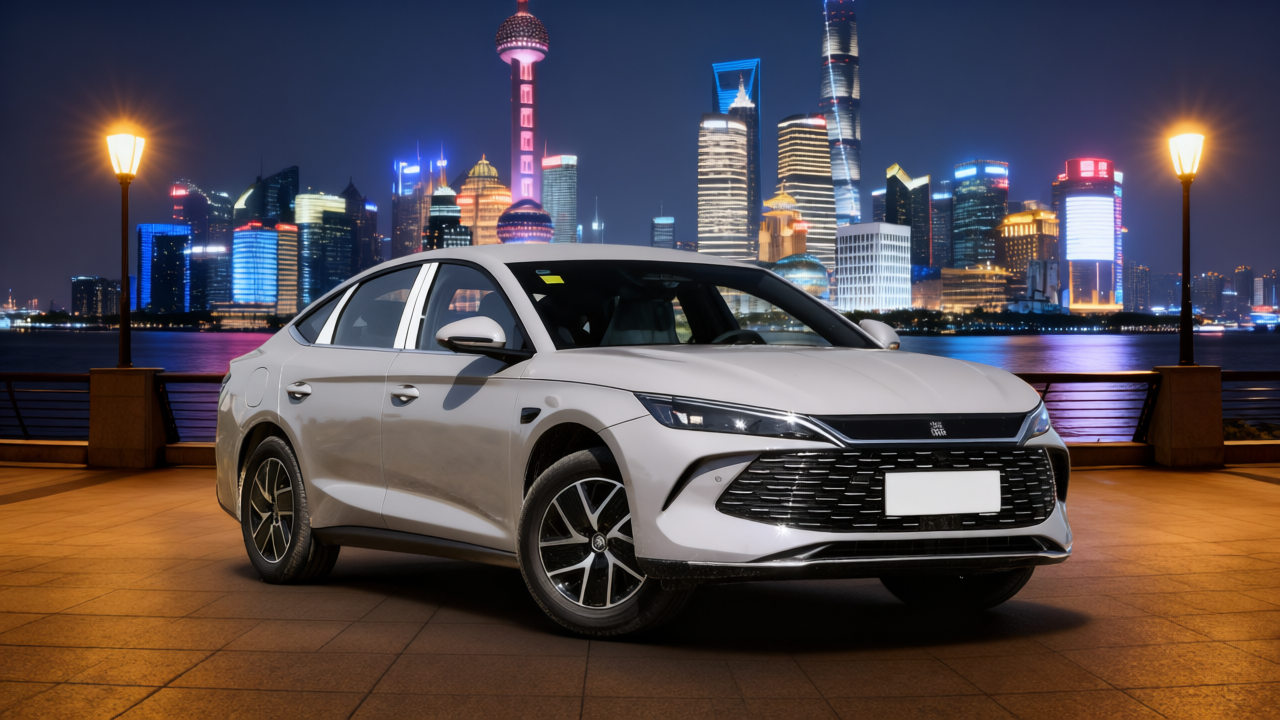
The car is built on an all-new full-size platform and debuts BYD's second-generation Blade Battery system, alongside substantial chassis upgrades. Its high-voltage electrical architecture supports ultra-fast charging and optimizes thermal management; engineering teams have also introduced multiple premium chassis components to enhance high-speed cornering stability under full load.
MIIT filings show dimensions of 5256 mm × 1999 mm × 1510 mm, with a wheelbase of 3130 mm. The plug-in hybrid variant pairs a 115 kW turbocharged engine with a 200 kW drive motor and a 54.489 kWh battery pack; the all-electric version offers two powertrain options: a single-motor RWD configuration delivering up to 370 kW, and a flagship dual-motor AWD setup — front motor at 200 kW and rear motor at 370 kW — for a combined output of 764 horsepower. The platform claims 'full-charge' replenishment in just nine minutes, enabled by BYD's next-generation flash charging technology. Top-trim models will also feature a roof-mounted LiDAR unit, providing hardware support for advanced intelligent driving functions.
In terms of market positioning, the vehicle primarily targets the RMB 300,000 (approx. USD 44,100) executive sedan segment to compete with joint-venture and imported luxury brands. BYD plans to launch an entry-level variant starting at RMB 200,000 (approx. USD 29,400), broadening its user base. This pricing strategy places it squarely in today's most fiercely contested market tier.
This unveiling follows the official release of teaser imagery and marks the formal rollout of BYD's new flagship design language. The company urgently needs this model to reinvigorate its voice in the premium sedan segment — where the previous-generation Han has shown clear signs of fatigue. Management views this new platform as a critical pillar for stabilizing its high-end product matrix.
Notably, the new Han will also face internal competition from its sibling model in BYD's Ocean Network lineup. With only a RMB 20,000–30,000 price gap between them, intra-brand rivalry intensifies. Data shows the older Han's domestic registration volume continues to decline: 3,390 units in May 2026, down from 2,834 in April — and far below 11,972 units registered in June 2025. Launching this new platform is seen as a vital move to reverse falling sales and restore scalable production capacity.
Comments
0 commentsNo comments yet. Be the first!
Post Comment