
Just two months after indefinitely suspending its $15 billion investment in the Canadian electric vehicle supply chain, Honda is evaluating the possibility of building a new vehicle assembly plant in North America—a move that is unlikely to bolster its Canadian operations and could further weaken its manufacturing presence in Canada.
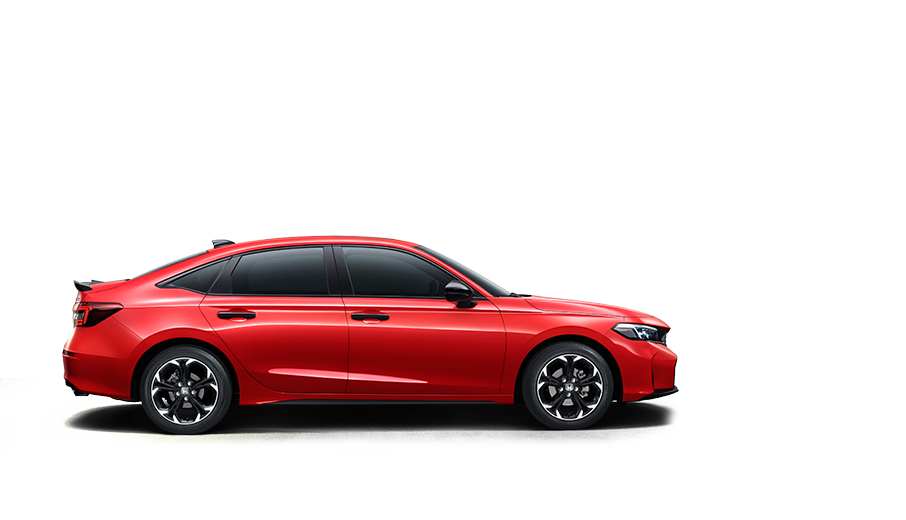
According to Honda CEO Toshihiro Mibe, speaking to Japan's Yomiuri Shimbun on July 18, if the plant is completed, it will become Honda 's eighth vehicle assembly plant in North America, designed to support regional sales growth and build a production "buffer capacity." However, Honda Canada spokesperson Ken Chiu emphasized that they are "still continuously assessing" capacity requirements and "have not yet made any decisions regarding the new plant."
Although Toshihiro Mibe did not disclose the potential location, several industry experts pointed out that given the ongoing trade tensions between the US, Canada, and Mexico, a US location is almost inevitable if the project proceeds. Greig Mordue, a professor of engineering at McMaster University and a former Toyota Canada executive, said, "Incremental investment naturally flows to the path of least resistance—and the biggest market is not in Canada, but in the United States."
Uncertainty remains high. The renegotiation process of the USMCA and the US midterm elections may reshape tariff policy , but Ryan Robinson, head of automotive research at Deloitte, points out: "If significant tariffs remain after the renegotiation, it will be difficult to justify new production capacity in Canada or Mexico ." Sam Fiorani, vice president of AutoForecast Solutions, also believes that the new plant is almost entirely locked in the US, "which will reduce the number of Canadian and Mexican-made vehicles sold to the US."
Honda currently employs over 4,000 people in Alliston, Ontario, where it produces the CR-V , Civic , and four-cylinder engines. Despite high tariffs imposed by Canada, its Canadian plant remains operating at full capacity. Mordue explained that Honda's commitment to its local workforce is a key factor in maintaining the base; however, its U.S. plants are already nearing full capacity and cannot absorb the transfer of Canadian production in the short term .
It's worth noting that Honda recently withdrew from its previously planned Canadian electric vehicle project: the comprehensive investment plan announced in 2024, which included EV vehicle assembly, battery cell production, and at least two battery material plants, has been shelved. Now, its North American growth focus is shifting to hybrid models, especially the CR-V—which is projected to sell over 250,000 units in Canada and the US in the first half of 2026, representing a year-on-year increase of nearly 5%. Approximately 75% of its annual Canadian production (around 400,000 units) is exported to the US, and the CR-V is also produced simultaneously at plants in Ohio and Indiana.
Honda Canada CEO Dave Jamieson acknowledged at the Markham, Ontario Auto Parts Manufacturers Association annual meeting in June, "We are facing not only change, but also a direct test of Honda's Canadian footprint and the long-term future of the Canadian auto industry." He also pointed out that variables such as new federal emissions regulations and the entry of Chinese-subsidized vehicles into the Canadian market are further exacerbating the challenges.
评论
0 条评论暂无评论,来发表第一条吧
发表评论