
Design: Beyond ‘Affordability’—A Structural Reconfiguration of Ownership and Usage Rights
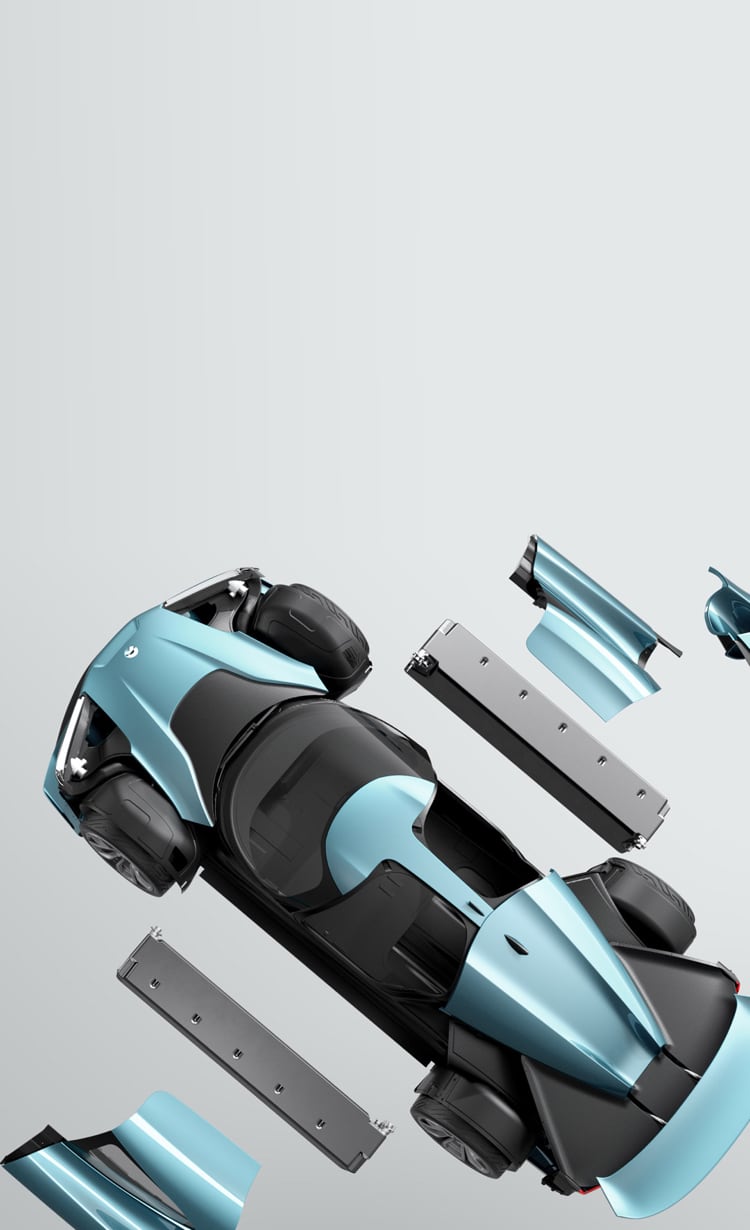
NIO’s Battery-as-a-Service (BaaS) is often oversimplified as ‘paying an extra ¥700 per month.’ But this view misses its essence: a structural separation of vehicle ownership and usage rights. BaaS doesn’t discount the car—it removes the battery—a high-depreciation, high-cost, high-uncertainty asset—from the user’s balance sheet entirely. Skipping the ~¥70,000 battery purchase lowers the total acquisition cost by nearly 20%, enabling users who’d otherwise need a 36-month auto loan to opt for just 24 months—or even pay in full. This financial flexibility represents a foundational optionality that internal-combustion vehicles have never offered.
Powertrain: A ‘Silent Realm’ Without an Engine—Yet with Stronger Long-Term Cost Advantages
On a monthly energy basis, BaaS users’ combined electricity + service fee does approach the fuel cost of comparable ICE vehicles—around ¥1,000. But the powertrain difference runs much deeper: electric drive delivers linear response, zero-delay torque, and seamless, jerk-free smoothness across all speeds—an irreversible leap in driving experience. On maintenance, EVs average just ¥300–¥500 annually (cabin air filter + brake fluid inspection), while ICE vehicles require regular oil, oil filter, spark plug, and transmission fluid replacements—costing over ¥12,000 more over five years. More importantly, battery swapping takes just 4 minutes and 32 seconds on average—15% faster than refueling—and requires no driver exit. This efficiency transcends mere ‘energy replenishment’; it’s a tangible realization of time economics.
Intelligence: The Battery-Swap Network Is Infrastructure—and a Physical Manifestation of the Service Contract
NIO treats each battery-swap station as a ‘nerve ending’ of intelligent mobility—not just a refueling point. Behind every station lies real-time battery health monitoring, AI-powered scheduling, and an integrated user credit system. Each swap delivers not only a fully charged battery, but one calibrated for State of Health (SOH), pre-conditioned for optimal temperature, and with refreshed Battery Management System (BMS) firmware—the equivalent of receiving a ‘factory-fresh’ unit. In effect, battery lifecycle management is fully entrusted to professional teams. By contrast, ICE vehicles confine ‘intelligence’ largely to cabin interaction, whereas NIO embeds intelligence directly into the power source delivery process—creating a closed-loop service covenant.
Pricing: Short-Term Parity, Long-Term TCO Reversal
Over a five-year ownership cycle, the total cost of the BaaS plan ≈ vehicle price + 60 × ¥700 (BaaS fee) + electricity ≈ ¥42,000 lower than the battery-buyout version. Meanwhile, ICE vehicles incur higher insurance premiums (~+8%), double the annual inspection frequency (EVs are exempt from mandatory inspections for the first six years), and unavoidable engine overhaul risks (probability exceeds 15% beyond 100,000 km). When factoring in battery degradation-related residual value loss (industry average: -8% annually), unpredictable repair costs, and hidden time-cost penalties, third-party research (2026 White Paper on Full-Cycle Ownership Costs of New Energy Vehicles in China) shows BaaS achieves lower total cost of ownership (TCO) than ICE vehicles in 67% of five-year scenarios.
Conclusion: BaaS Is No Compromise—It’s a Rational Choice for an Uncertain Future
The value of NIO’s BaaS has never resided in ‘how much you save monthly,’ but rather in ‘which uncontrollable risks it shields you from.’ It transforms the battery—the single largest variable—into a predictable, swappable, and upgradable service item. It shifts car purchasing from a ‘one-time heavy-asset investment’ to an ‘on-demand, subscription-style mobility consumption.’ For users planning to upgrade within 5–8 years, prioritizing cash flow, or seeking relief from tech obsolescence anxiety, BaaS isn’t a transitional solution—it’s a more modern vehicle usage paradigm. True advantage always lies beyond the invoice—in every silent, effortless launch; in every arrival unburdened by waiting; and behind every battery that remains perpetually ‘fresh.’
Comments
0 commentsNo comments yet. Be the first!
Post Comment