
Design: Breaking Free from Homogeneity, Evolving the Brand Language
At the 2026 Chengdu Auto Show, the Xiaomi Pengcheng N70 debuted its interior in full — not an enlarged version of the SU7 or YU7, but the first model of Xiaomi Auto's all-new independent product line 'Pengcheng', positioned as a 'smart variable large-space SUV'. Its front fascia retains Xiaomi's signature cross-shaped headlight layout, yet reimagines visual logic with 'dragonfly-wing'-style DRLs; the full-width front trim panel embeds the 'SkyNomad' logo and offers four customizable trims: brushed silver, patina-gray brushed, brushed gold, and perforated black. These details underscore user choice.
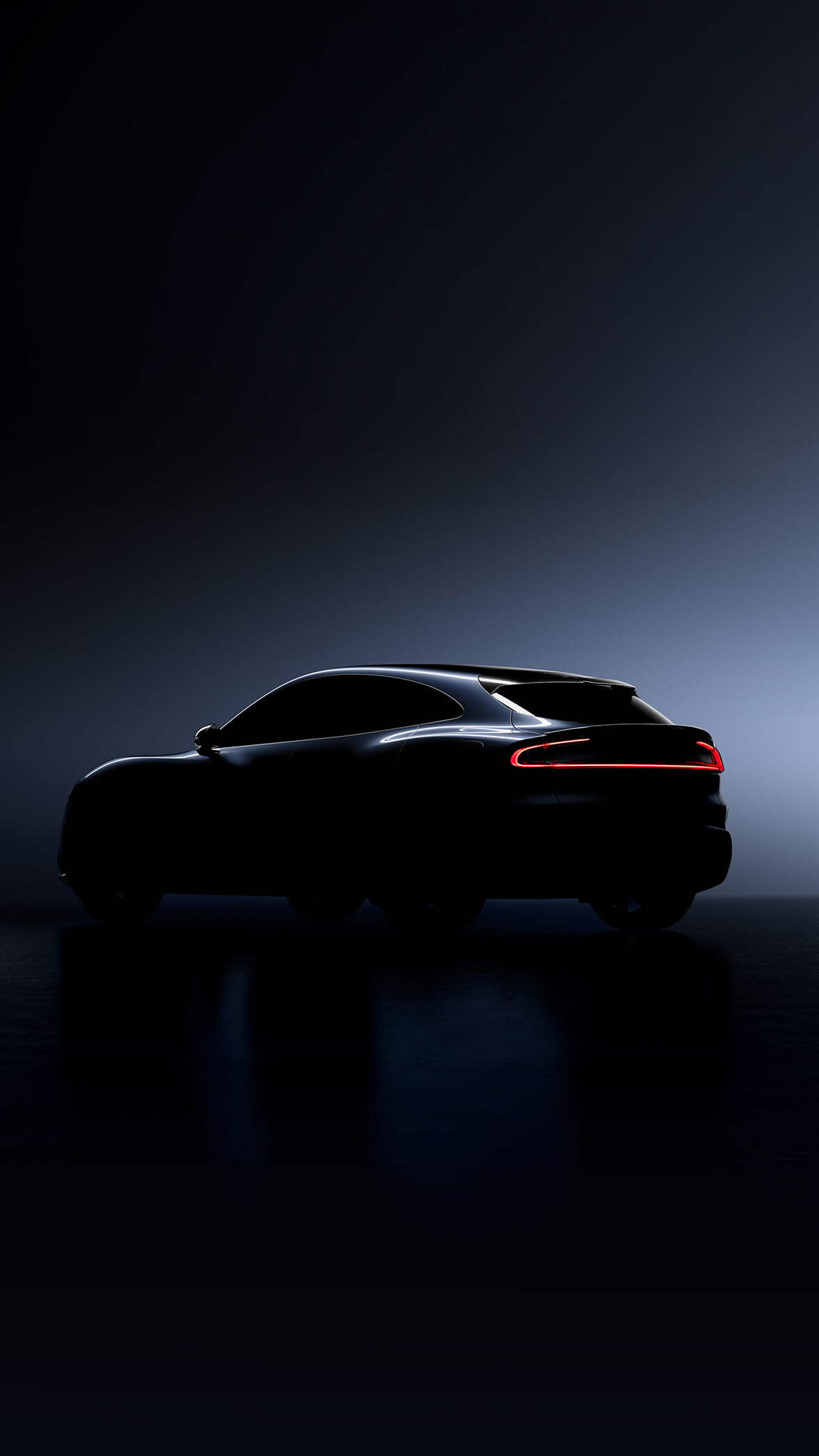
The body adopts a short front overhang / long rear overhang proportion, with the A-pillar moved forward to maximize front-row space. Semi-concealed mechanical door handles comply with China's latest national standards, while the exterior mirrors retain the same floating design used on the SU7/YU7. The three-dimensional star-ring taillights deliver high on-road recognition. Dimensions measure 4960 × 1998 × 1765 mm (L×W×H), with a wheelbase of 2950 mm — placing it firmly among the top tier of mid-to-large SUVs.
Powertrain: Standard 1.5T Extended-Range System, Single- and Dual-Motor Options for Diverse Use Cases
The Xiaomi Pengcheng N70 is powered exclusively by a 1.5T engine-based extended-range system, offering two configurations: rear-wheel drive with a single motor, and all-wheel drive with dual motors. The single-motor variant delivers up to 210 kW; the dual-motor version matches the N90's motor outputs — 210 kW for the front motor and 100 kW for the rear. Battery options include 76 kWh and 52 kWh variants. The N70 Max achieves a CLTC all-electric range of up to 505 km; the N70 Pro posts a WLTC minimum fuel consumption of 5.7 L/100 km in hybrid mode. Note: The original text does not explicitly assign battery capacities or driving-range figures to specific powertrain variants — final specifications remain subject to official confirmation.
Intelligence: HyperOS Cockpit + Thor-U Chip — Dual Upgrades in Voice & ADAS
Cockpit hardware is robust: an 8.8-inch digital instrument cluster, a 20-inch HUD, a 16.1-inch central touchscreen (running HyperOS and powered by the Qualcomm Snapdragon 8650 automotive chip), a detachable 6.88-inch rear-seat control screen, and a 21.45-inch fold-down rear display are all standard. 'Super Xiao Ai' voice assistant comes standard, supporting dynamic in-cabin voice zone detection and 'walk-and-talk' external voice interaction.
For intelligent driving, the vehicle features a roof-mounted LiDAR, one millimeter-wave radar, and eleven ultrasonic sensors. Its compute platform is the 700 TOPS NVIDIA Thor-U chip, running Xiaomi's HAD large model to enable highway and urban NOA (Navigate on Autopilot), plus valet parking assistance. However, all functions are currently in demonstration or pre-installed status — real-world performance and rollout timelines remain to be validated post-launch.
Space & Cabin: Flat Floor + 180° Rotating Seats — Redefining 'Variable'
What truly sets the N70 apart from competitors is its spatial philosophy built around the Kunlun architecture: a flat floor combined with long sliding rails enables the front seats to rotate 180°, forming a face-to-face seating configuration with the second row. Removing the front headrests allows the front and second-row seats to join into a full-size bed mode. Dual cupholders flank both sides of the center console island, with wireless charging integrated on one side — these are not gimmicks, but engineering responses tailored to real-life scenarios: family travel, business reception, light-duty camping, and impromptu rest.
Pricing & Competition: Pre-orders Open at ¥259,900, Targeting Li L6 and AITO M6
The Xiaomi Pengcheng N70 Max has entered pre-order phase at ¥259,900; the full lineup will launch officially in September 2026. It enters the fiercely contested ¥200,000–¥300,000 segment for mid-to-large five-seat SUVs, competing head-on with Li L6, IM LS6, Dongfeng eπ M8, and AITO M6. While rivals often emphasize hardware stacking — 'refrigerator, big-screen TV, and premium sofa' — the N70 seeks differentiation through original design language and its variable-space logic.
Conclusion: A Scenario-Centric Breakout Attempt
At a time when extended-range SUVs are increasingly homogenized, the Xiaomi Pengcheng N70 avoids the spec arms race and instead focuses on users' real-life mobility flows — face-to-face meetings, reclined naps, rear-seat office work, or spontaneous rest stops. With its adjustable rail system and holistic cabin reconfiguration, it transforms 'space' from a static container into a dynamic service enabler. If the ¥259,900 Max variant delivers on the promised reliability of the Kunlun architecture and the practical usability of HAD intelligent driving, it could emerge as a rare 'quality-focused contender' in this segment. Yet its long-term success hinges on delivery quality, software update cadence, and after-sales service execution following the September launch.
Comments
0 commentsNo comments yet. Be the first!
Post Comment