
Design: Subtle Exterior Updates, Interior Quality Leaps Forward
The Li L6 2026 model retains the current generation's overall silhouette without structural changes — but refines details. The lower front bumper is upgraded from standard black plastic to piano-black lacquer trim, delivering a refined, soft-gloss finish that significantly elevates front-end sophistication. Two new exclusive colors debut: Dune Yellow and Hyacinth Purple — latter evoking the gentle, creamy tone of taro bubble tea, offering high visual appeal and lasting charm.
The interior truly stands out — materials and craftsmanship now match those of Li L9. Air vents, center console trim, and steering wheel buttons all adopt the same design as the L9: solid tactile feedback, uniform gaps, and supple leather upholstery. Step inside, and the leap in perceived quality is immediately evident. One regret: the small steering-wheel display has been removed, reducing some interaction convenience.
Powertrain: 51.4kWh Battery + 300km CLTC All-Electric Range; No Upgrade to Range Extender
Under the hood, the battery capacity increases to 51.4kWh, enabling a CLTC all-electric range of 300km — making daily urban commuting fully feasible on electricity alone, markedly boosting practicality. However, the vehicle does not adopt the third-generation range extender already deployed in the L8/L9. Engine start-stop noise and vibration remain largely unchanged versus the previous model; under low-state-of-charge or highway conditions, engine sound remains somewhat intrusive, indicating room for further NVH refinement.
Intelligence: Four LiDARs + 29-Inch 6K Display — Voice System Truly Grasps Complex Commands
Smart features represent one of this refresh's biggest highlights. The optional embodied intelligence package includes four LiDARs — including a solid-state unit at the rear license plate mount — necessitating a slight upward repositioning of the license plate and subtle rear-end styling tweaks. Caution advised: the rear LiDAR and adjacent camera generate notable heat during operation; users wearing shorts in summer should avoid contact with this area to prevent minor burns.
The infotainment hardware is top-tier: a 29-inch 6K-resolution panoramic display with 120Hz refresh rate, powered by the 8797 chip — delivering buttery-smooth operation and instant responsiveness. Real-world testing of complex multi-step voice commands — e.g., 'Navigate to Electronics Plaza, but first pick up someone at Yaoyuan, then head to Beijing Capital International Airport to collect another passenger, then find hotpot nearby — but before all that, I need to use the restroom' — showed full cross-scenario intent parsing. The system autonomously plans multi-leg routes, retrieves lifestyle services, and integrates real-time data — all without step-by-step wake-up. Its comprehension and contextual service capability rank among the best currently available in production vehicles.
Yet UI design reveals clear shortcomings: apps use oversized tile layouts heavily biased toward the front passenger side — causing navigation maps to shift rightward from center. Drivers wearing polarized sunglasses (with no HUD visibility) must turn their heads sharply to read the screen, posing safety concerns. Right-side controls in apps like QQ Music fall outside natural reach — even with 'see-and-say' support, usability remains suboptimal. We hope future OTA updates unlock customizable home-screen widgets.
Rear entertainment has also been upgraded: a standard 21-inch 4K rear display — identical to those in the L8/L9 — delivers a notably improved audiovisual experience. Though the L6's tighter wheelbase limits screen size, its aspect ratio actually feels more balanced than larger siblings'.
Comfort & Chassis: Dual Zero-Gravity Seats Arrive, CDC Suspension Tames 'Ship-Like' Motion
Comfort enhancements strongly align with family-user needs. Front seats now feature dual zero-gravity functionality: upon activation, the steering wheel automatically rises and seats recline in unison — not quite astronaut-grade zero-G, but highly effective for midday naps, waiting, or charging stops. Ventilation, heating, and 18-point massage are standard across all trims.
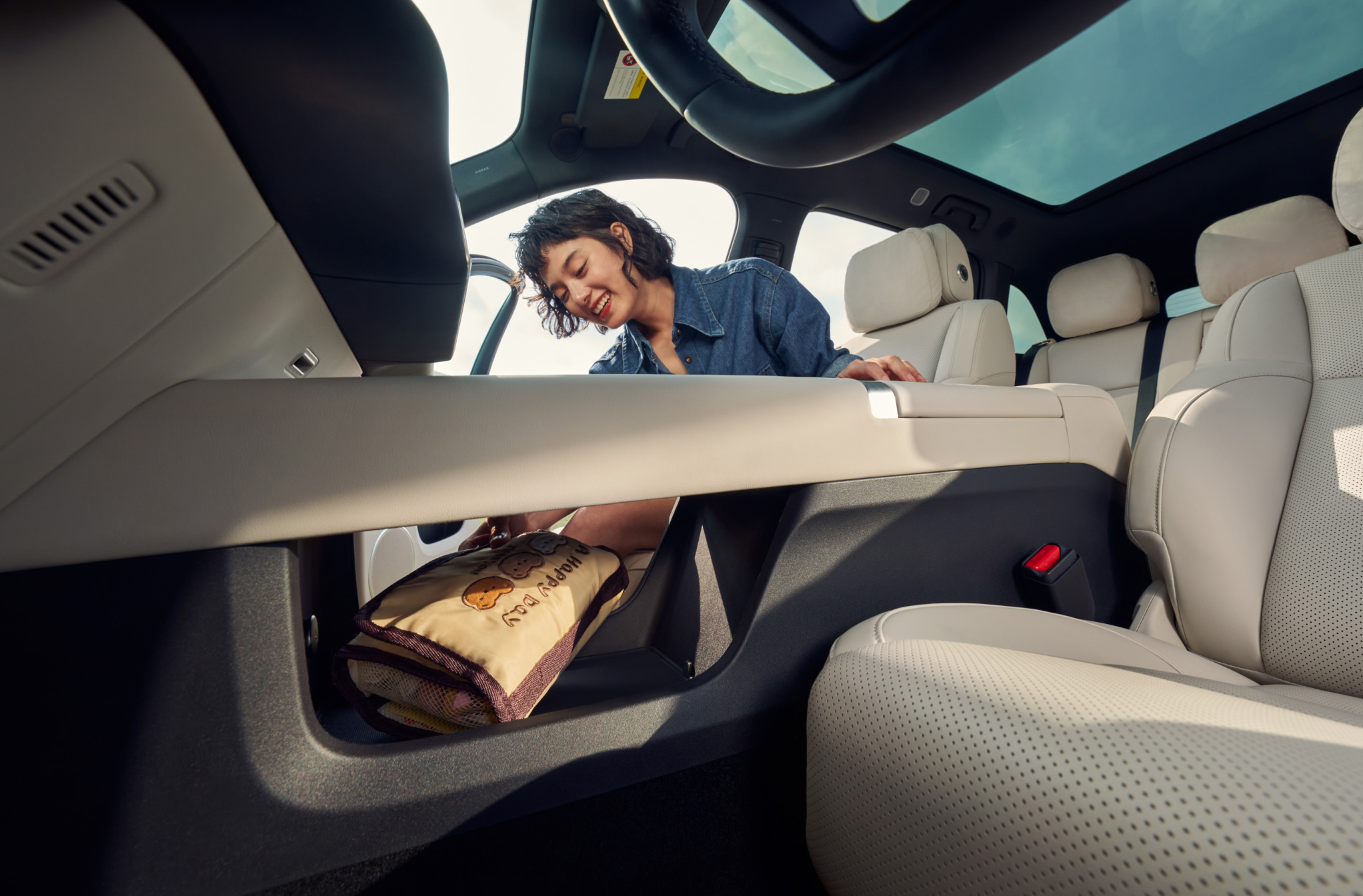
Rear seat cushions have been dramatically lengthened for superior leg support; backrest recline angle expands to 140°, enabling relaxed postures. However, when fully reclined, the cushion doesn't sit flush with the pivot axis — leaving a slight protrusion that may press uncomfortably into the lumbar region for some users. Climate control upgrades to five-zone independent temperature management, adding dedicated footwell zones for driver and front passenger — enhancing precision, though practical benefit remains subjective.
Chassis-wise, all variants now include dual-valve CDC (Continuous Damping Control) adaptive suspension — though air springs remain absent. Compared to the prior model, body compliance, high-speed cornering roll control, and pitch/yaw stability during quick lane changes improve noticeably — effectively eliminating the 'floating ship' sensation. But ride tuning involves clear trade-offs: smooth roads feel taut and composed, while cracked pavement or deep potholes trigger increased tire chatter — delivering richer, more direct road feedback.
Pricing & Verdict: Benchmark 250,000-RMB Family SUV, Intelligent Driving Still Evolving
The final pricing for the Li L6 2026 model hasn't been officially announced yet. Market rumors suggest a starting price around 249,800 RMB, with dealer incentives still pending confirmation. Overall, this annual update isn't incremental — it delivers systematic improvements across five key areas: interior quality, smart cockpit, rear-seat experience, comfort features, and chassis refinement — further solidifying product competitiveness.
That said, perfection remains elusive: the third-generation range extender and air suspension haven't trickled down yet; the VLA2.0 M100 intelligent driving system — powered by dual Mach M100 chips and native 3D ViT models — is still in its adaptation phase. Observed limitations include frequent disengagement in parking-lot navigation, hesitation on narrow roads, misidentification of tidal lanes, and relatively low safety redundancy in human-vehicle interaction — all expected to improve via upcoming OTA updates.
If you prioritize integrated excellence in refinement, intelligence, and comfort — and accept that intelligent driving maturity is still evolving — the Li L6 2026 model remains an exceptionally compelling choice in the 250,000-RMB segment. If you demand fully matured autonomous capabilities or higher-tier hardware, waiting 1–2 years for further iterations may be prudent.
Comments
0 commentsNo comments yet. Be the first!
Post Comment