
TOYOTA, the world's top-selling automaker, is facing mounting growth pressure. In May 2026, its global sales (including Lexus brand vehicles) reached 834,279 units, down 7.2% year-on-year. This marked the fourth straight month of YoY decline.
While North America, Europe, and Japan posted relatively stable results — North America sold 280,539 units (down 0.1% YoY), and Europe 99,597 units (down 0.3%) — China's sharp contraction dragged down the global tally: sales in China totaled just 102,299 units in May, a steep 31.7% drop YoY. TOYOTA attributed this to a "persistently challenging market environment, including continuously rising gasoline prices."
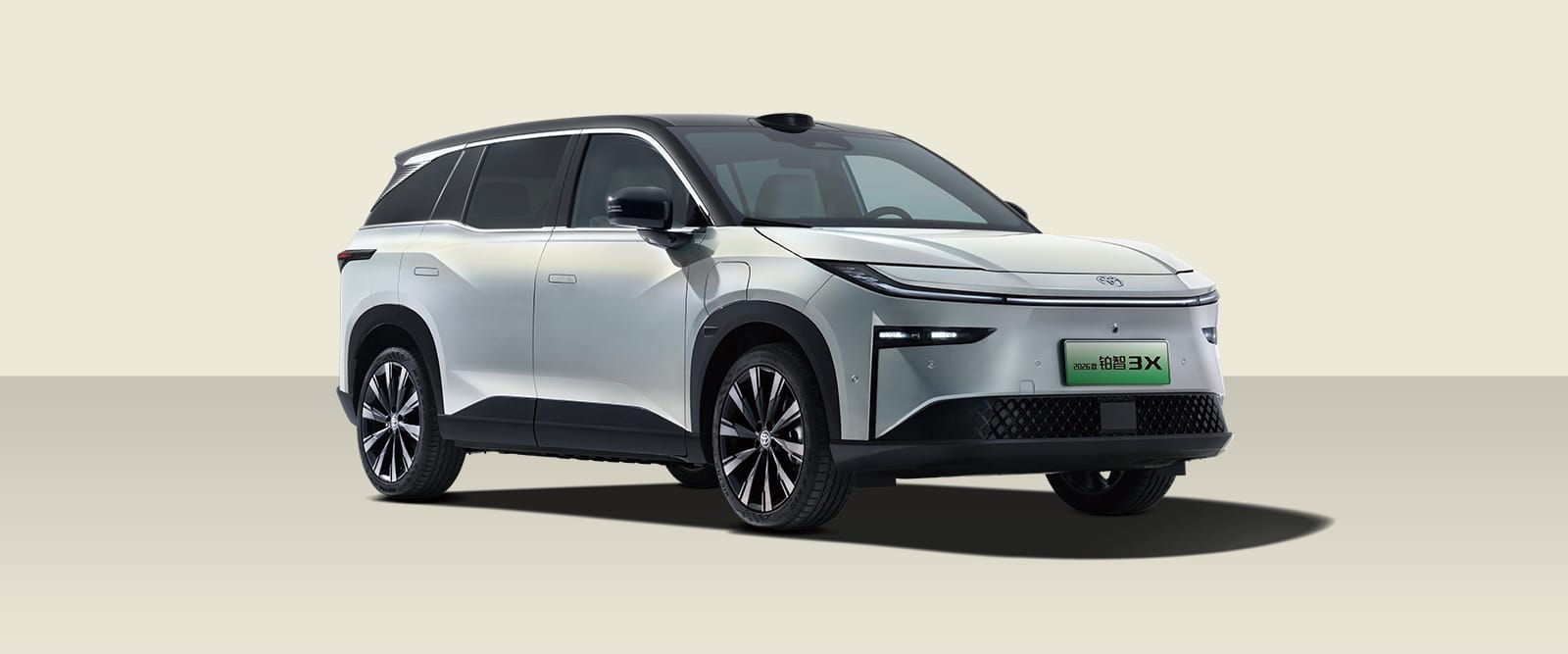
Data shows that in the first five months of 2026, TOYOTA's cumulative sales in China stood at 579,419 units — 15% lower than the same period last year. Notably, battery-electric models launched by its joint ventures performed strongly: the compact SUV bZ3X, starting at approximately ¥109,800 (≈$15,000), has ranked #1 among BEVs from Chinese joint ventures for seven consecutive months; meanwhile, another BEV SUV — the bZ4X (marketed domestically as "bZ" and overseas as "bZ4X") — ranked third among U.S. EVs in Q1 and became Japan's best-selling domestically produced EV for the first time.
Overall, TOYOTA's BEV sales surged globally: 37,313 units were sold in May 2026 — a 170% YoY increase — while cumulative BEV sales for the first five months reached 155,074 units, up 138% YoY. Yet this still accounts for only 7% of its total volume, underscoring low EV penetration.
Currently, TOYOTA's electric lineup in China relies primarily on two joint-venture platforms — GAC TOYOTA and FAW TOYOTA — covering models including the bZ3 sedan, bZ3X SUV, and the newly launched flagship bZ7 sedan. Its technical approach leans heavily on local supply chains, incorporating core components and solutions from Chinese suppliers such as BYD. Meanwhile, demand for traditional ICE vehicles remains under sustained pressure — not only due to high fuel prices but also because consumers are rapidly shifting toward more efficient and intelligent BEVs.
Although TOYOTA has planned several upcoming BEV SUVs — including the Highlander BEV and Lexus TZ (a three-row electric SUV) — and is advancing multiple electrified models like the C-HR+ and bZ Woodland (i.e., bZ4X Touring), it continues to pursue its "multi-path strategy," covering BEV, HEV, PHEV, and ICE powertrains. Yet the precipitous sales collapse in China — the world's largest single automotive market — is sounding alarms about the long-term resilience of this strategy.
Comments
0 commentsNo comments yet. Be the first!
Post Comment