
Design: A Mobile Living Space Built on a Flat Floor
When 'car shopping' becomes 'apartment hunting', Xiaomi Pengcheng truly shifts automotive product logic into a new dimension. Leveraging the all-new Kunlun technical architecture, the N90 Max achieves — for the first time in a standard-size extended-range SUV — a 2.9-meter flat floor. This isn't the compromised flatness seen in MPVs; it's a structural re-engineering from the chassis up. The front seats rotate 180° rearward to form a face-to-face layout with the second row; six intelligent sliding rails (up to nearly 2 meters long) support powered movement and hover functionality, enabling flexible integration of center consoles, foldable tables, storage modules — even projection screens. The 18 officially unveiled 'in-cabin floor plans' aren't marketing gimmicks: with seven passengers aboard, the trunk still fits seven 20-inch carry-on suitcases; erecting a tent transforms it instantly into a camping unit; raising the roof converts the interior into an upper-and-lower bunk configuration — it's not an RV, yet it delivers full RV functionality.
Powertrain: Big Battery + Small Fuel Tank — A Rational, EV-First Extended-Range Strategy
The N70 Max packs a 76 kWh battery pack, delivering a CLTC all-electric range of 505 km — the top tier among current extended-range models. While official figures for the N90 Max's battery capacity and range remain undisclosed, the brand states its all-electric range 'exceeds that of the N70 Max'. Its powertrain follows the extended-range approach, offering two output configurations: maximum power of 58 kW and 85 kW, with peak torque of 130 N·m and 150 N·m respectively — though the exact mapping between versions and tuning is unconfirmed. Lei Jun explains that no pure electric variant is planned, because fitting an oversized battery into this large-space SUV would significantly raise both cost and curb weight, undermining the balance between range and handling. This deliberate trade-off targets real-world family usage: daily commutes run purely on electricity, while longer trips rely on the range-extending engine — eliminating range anxiety without depending on underdeveloped battery-swapping infrastructure.
Intelligence: Ecosystem Integration Over Gimmicky Tech Stacking
As a pivotal node in Xiaomi's 'human-vehicle-home full ecosystem', Pengcheng avoids overloading redundant ADAS hardware. Its smart cockpit deeply integrates Xiaoai Assistant, Mi Home IoT devices, and the CarWith connectivity protocol; the rail-based ecosystem seamlessly links projectors, portable fridges, and height-adjustable desks. In front-seat rotation mode, the central display automatically switches to collaborative meeting or entertainment interfaces; zero-gravity seats paired with foldable tables create a mobile office setup. Notably, the brand has made no mention of LiDAR configuration, urban NOA rollout timelines, or premium ADAS subscription plans — the intelligence focus clearly centers on 'spatial interaction efficiency', not 'algorithmic spec wars'.
Pricing: Pre-orders Set, Final Price Still Uncertain
The N70 Max carries a pre-order price of ¥259,900; the N90 Max is priced at ¥299,900. Xiaomi Automotive historically launches products below their pre-order prices, suggesting the final retail price 'may drop further'. Specific trim-level configurations, battery warranty terms, and financing options have yet to be disclosed — and it remains unconfirmed whether optional packages or customization services will be offered.
Conclusion: Completing the Puzzle, Not Saving the Market
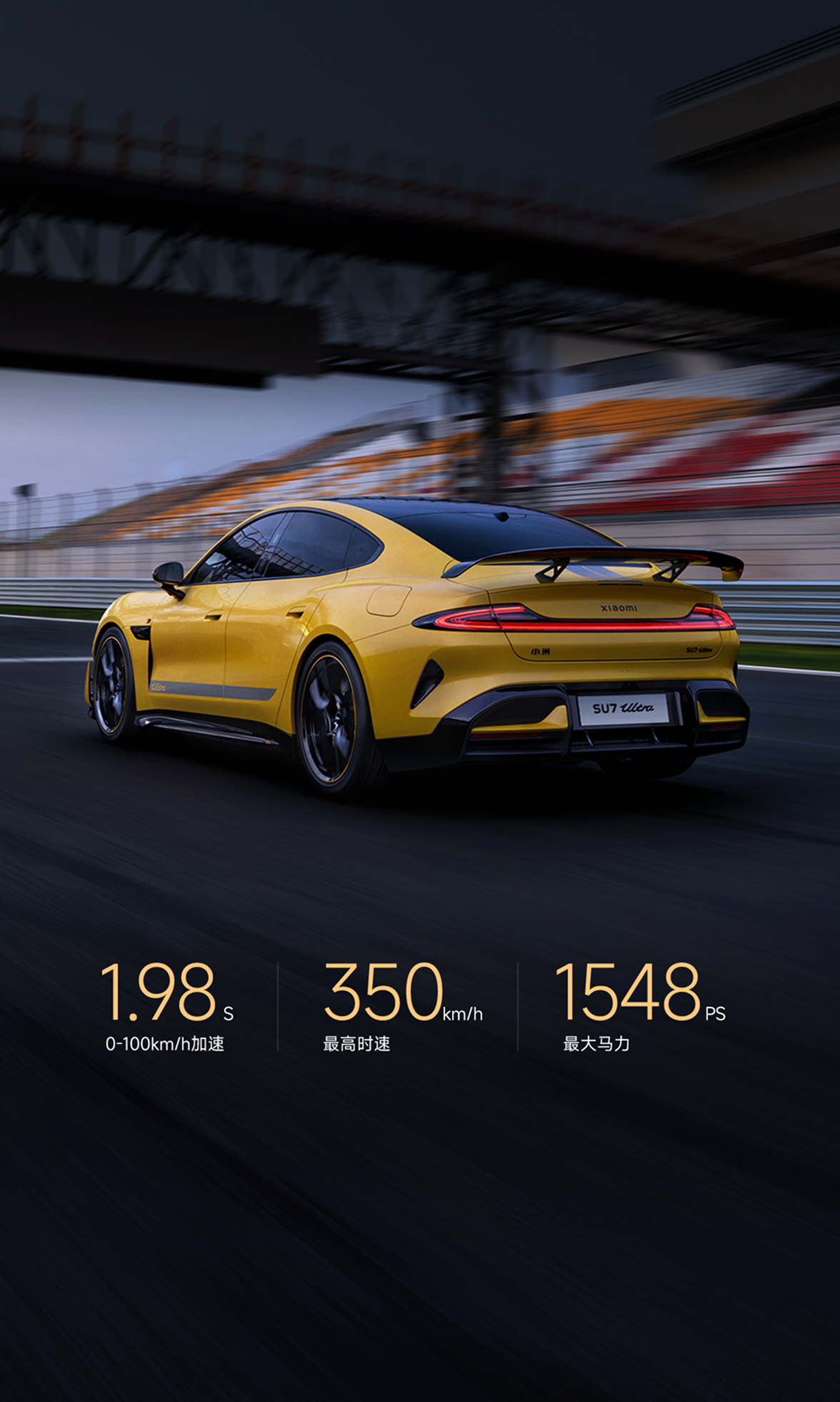
Xiaomi Pengcheng's true value lies not in reigniting extended-range enthusiasm, but in plugging a critical gap in its own product lineup. The SU7 and YU7 target driving pleasure; the Pengcheng N70/N90 series targets family life — 'fun to drive' versus 'comfortable to live in'. Facing an increasingly crowded extended-range segment — projected to host 54 new models by 2026 — it avoids raw-spec dominance, instead carving out a unique lane through spatial reconfiguration and ecosystem synergy. Whether it can replicate the delivery momentum of the SU7/YU7 hinges on production ramp-up speed, depth of channel expansion, and — most crucially — real consumer willingness to pay for a 'mobile apartment'. After all, buying a car like buying a home ultimately means you only get the keys once delivery is complete.
Comments
0 commentsNo comments yet. Be the first!
Post Comment