
Tesla is accelerating its transformation into a "Model Y-centric company" — with the discontinuation of flagship models Model S and Model X, its U.S. sales growth now fully hinges on the world's best-selling electric vehicle. Recently, Tesla officially launched the new long-wheelbase, three-row Model Y L in the U.S., aiming to extend product-line relevance with a more practical cabin layout.
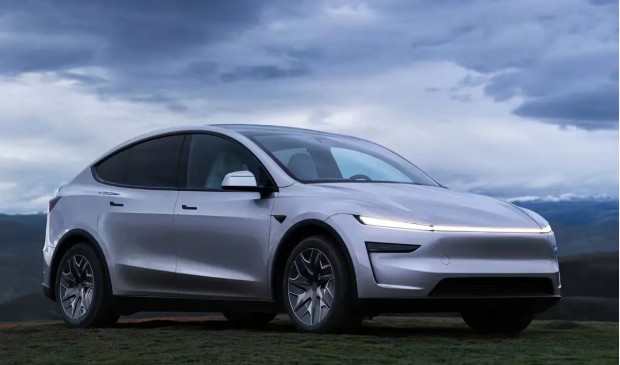
According to official information, the Model Y L launches exclusively in the top-tier Launch Series trim, priced at $63,630 including delivery. The vehicle is approximately 7 inches (17.8 cm) longer than the standard Model Y, with a wheelbase extended by about 6 inches (15.2 cm). It offers a six-seat configuration — two captain's chairs in the second row and a two-person third row — and claims "ample headroom and legroom for all passengers." Tesla states the cargo volume reaches 89 cubic feet (~2.52 m³), while the front trunk can accommodate skis, bicycles, and luggage.
However, real-world passenger comfort remains constrained: third-row space is tight, with limited headroom and legroom — leading multiple analysts to describe it as "far from a traditional family SUV." By comparison, rivals like the Rivian R1S and Hyundai Ioniq 9 offer seven-seat layouts with significantly more generous third-row room.
Data shows the Model Y was the top-selling EV in the U.S. during the first half of 2026, with Motor Intelligence reporting 163,454 units delivered — a 9% year-on-year increase — and accounting for roughly two-thirds of Tesla's total U.S. deliveries. Meanwhile, Tesla's overall U.S. deliveries declined 11% year-on-year, impacted by the discontinuation of the Model X and Model S.
Tesla currently sells only three vehicles in the U.S.: the Model Y, Model 3, and Cybertruck. Notably, its next in-house-developed vehicle isn't a conventional family car — it's the dual-seat, steering-wheel-free, pedal-free Robotaxi, Cybercab. CEO Elon Musk has repeatedly emphasized that future profitability will pivot toward autonomous ride-hailing services — not private vehicle sales.
Industry analysts characterize the Model Y L as a "low-cost incremental strategy": stretching the existing platform to quickly enter a new segment without developing an entirely new architecture. Yet some question whether this move comes "too late" — in a market where families increasingly favor boxy, large-format SUVs, the Model Y L's sleek silhouette and limited third-row practicality may struggle to challenge benchmark models like the Chevrolet Suburban or Kia Telluride.
The Model Y L has already launched in markets including China and Australia. China introduced it last year; Australia followed this year — but Tesla has not disclosed model-specific sales figures. Overseas media reactions are mixed: The Beep praised it as "softer, roomier, and better value," yet quipped its styling "looks like a Model Y that just finished a big meal," citing excessive rear overhang and disproportionate proportions — "definitely not a choice elegant."
Comments
0 commentsNo comments yet. Be the first!
Post Comment