
Domestic SUV sales data for the first half of 2026 has officially been released. Amid concentrated release of mid-to-high-end upgrade and replacement demand — especially in the RMB 200,000+ segment — new energy SUVs are rapidly penetrating mainstream markets: seven of the top ten best-selling models are NEVs. While fuel-powered SUVs continue to see shrinking overall market share, intelligent ICE models like the GEELY Geely Boyue L demonstrate strong resilience.
NEV Segment: Model Y Dominates, Xiaomi YU7 Ranks Fourth
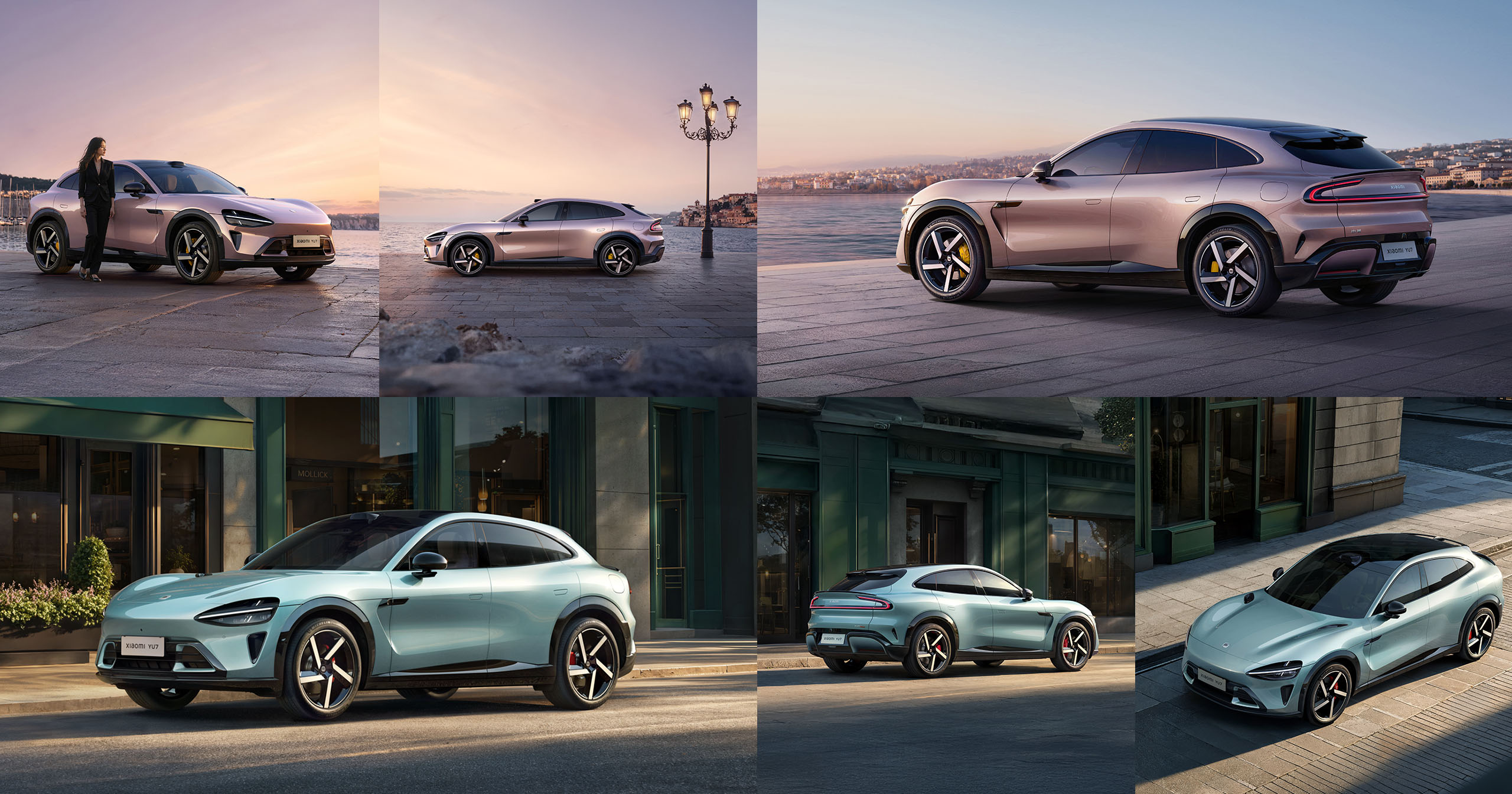
Tesla Model Y leads the pack with 172,513 units sold in H1 2026, achieving 38,654 deliveries in June alone — reinforcing its benchmark status in the intelligent BEV SUV segment. Li i6 follows closely with 120,443 units sold, now serving as the current volume driver for the Li brand. Xiaomi YU7 delivered 104,559 units in H1 — surpassing Fangchengbao Ti7 (94,417 units) and NIO ES8 (78,618 units) to claim fourth place. Notably, this figure reflects cumulative deliveries since Xiaomi YU7's launch in June 2025 and excludes sales from the all-new 2026 model year, which have yet to begin.
Xiaomi YU7 is powered by the NVIDIA Thor chip (700 TOPS computing power) and supports end-to-end assisted driving via Xiaomi HAD. Its CLTC maximum range reaches 835 km; the GT variant accelerates from 0–100 km/h in just 2.92 seconds, and achieves 10–80% charging in as little as 12 minutes. All trims feature a closed dual-chamber air suspension and dual-valve CDC dampers. Currently available in Standard and GT variants, official specifications and configurations for the 2026 model year remain unannounced.
Fuel-Powered Segment: Geely Boyue L Is Sole Model Over 100,000 Units; Joint Ventures Rely on Price Incentives to Hold Ground
Among fuel-powered SUVs in the top ten, GEELY Geely Boyue L ranks first with 110,621 units sold — the only ICE SUV to exceed 100,000 units in H1 2026. It offers both 1.5T and 2.0T powertrains, delivering peak outputs of 181 hp and 218 hp respectively, paired with a 7-speed wet dual-clutch transmission and a WLTC combined fuel consumption of 6.85 L/100 km. Smart features include the Qianli Haohan H3 ADAS, AR-HUD, queen style front passenger, and Flyme Auto cockpit.
Volkswagen Tiguan L (82,806 units), GEELY Geely Monjaro (82,264 units), HONDA CR-V (69,089 units), and TOYOTA RAV4 (68,874 units) occupy positions two through five in the fuel-powered segment. The Tiguan L PRO is equipped with the third-generation EA888 engine (162 kW max power); RAV4 offers three powertrain options — 2.0L gasoline, 2.0L hybrid, and 2.5L hybrid — with a best-in-class WLTC fuel consumption of just 4.59 L/100 km; Geely Monjaro introduced its i-HEV intelligent hybrid variant in 2026, achieving a WLTC fuel consumption of 4.75 L/100 km.

Market Insight: Price Band Polarization Intensifies; Intelligence Becomes Lifeline for ICE Vehicles
Data shows that the average transaction price of NEV SUVs in the top ten significantly exceeds that of their fuel-powered counterparts. Pure-electric SUVs priced between RMB 200,000–300,000 are now the primary choice for mid-to-high-end upgrades and replacements, whereas the RMB 100,000–200,000 band remains the core stronghold for fuel-powered SUVs. Editorial analysis notes that for ICE vehicles to sustain competitiveness, relying solely on terminal discounts is no longer viable. Instead, differentiation must be built upon mature platforms coupled with intelligent upgrades — such as the 8155 chip and high-level ADAS featured in both Geely Boyue L and Geely Monjaro. Conversely, in the NEV segment, new model iteration cycles have dramatically shortened, compressing the lifecycle of breakout hits: models like Xiaomi YU7 and Fangchengbao Ti7 entered the top ten just six months after launch — underscoring strong market validation for rapid responsiveness and technical integration capabilities.
Comments
0 commentsNo comments yet. Be the first!
Post Comment