
Design: Eastern Aesthetics Meets Flagship Presence
The 2026 Geely Galaxy V900 positions itself as an 'AI-Powered Full-Scenario Family Flagship MPV', deliberately moving beyond traditional MPV stereotypes focused on business use. It adopts the Galaxy family's ripple-inspired front fascia and a full-width light curtain headlamp assembly, paired with a floating roofline and elongated character lines — forging a visual language that balances dignity and tech-forward appeal. With dimensions of 5245 × 1905 × 1820 mm and a 3105-mm wheelbase, it squarely fits the mid-to-large MPV segment. In the right-side view, the silver paint finish exudes quiet strength against a backdrop of starry mountain skies — this isn't just a design upgrade, but a precise alignment with family users' aesthetic sensibilities and identity aspirations.

Powertrain: Mature, Reliable Extended-Range System with Reassuring EV-Depleted Performance
The V900 lineup features a 1.5T range extender paired with dual-motor AWD. The engine delivers peak power of 120 kW and achieves a thermal efficiency of 47.26%; combined front/rear motor output reaches 340 kW maximum power and 523 N·m maximum torque. Rather than chasing headline specs, this system prioritizes seamless oil-electric synergy — delivering a WLTC combined fuel consumption of just 0.78 L/100 km. In real-world EV-depleted operation, fuel consumption averages ~7.1 L/100 km, and compatibility with 92-octane gasoline significantly lowers everyday usage barriers.
Its core strength lies in range redundancy: a 43.3-kWh ternary lithium battery (using CALB cells, packaged with Shen Dun Battery Technology) enables a CLTC all-electric range of 220 km; backed by a 60-L fuel tank, total CLTC combined range reaches 1180 km. DC fast charging replenishes 80% in just 24 minutes, and standard battery heating/cooling systems ensure strong state-of-charge retention in cold weather. Vehicle-to-vehicle (V2V) and vehicle-to-load (V2L) external power supply are supported at up to 6.6 kW — enough to run small household appliances or camping gear, truly enabling 'mobile power station' functionality.
Intelligence: Flyme Auto + G-ASD H5 — Dual-Track Evolution in Cockpit & ADAS
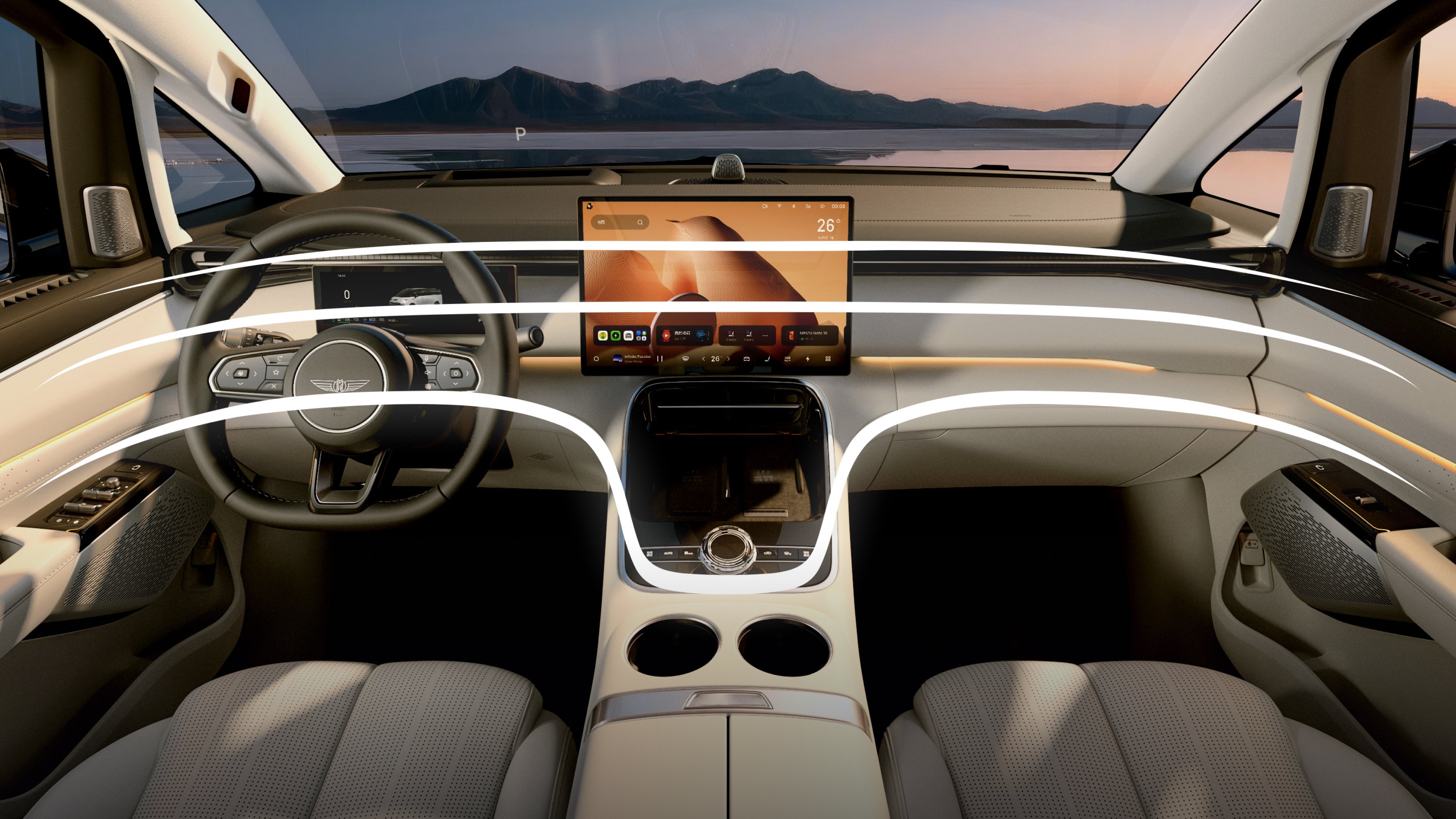
The cabin is powered by a Qualcomm Snapdragon 8295 chip and centered around a 15.4-inch floating infotainment display. Flyme Auto delivers smooth responsiveness, supports six-zone voice recognition, and enables continuous wake-up via 'Hi, Galaxy'. Core functions — including navigation, OTA updates, and Bluetooth calling — are fully implemented. An AI-powered large language model enhances semantic understanding, though full 'see-and-say' capability across all scenarios remains unavailable — currently delivering 'strong functionality with stable experience'.
For intelligent driving, the G-ASD H5 system leverages an NVIDIA Orin chip and fuses inputs from nearly 30 sensors: LiDAR, millimeter-wave radar, ultrasonic sensors, and high-definition cameras. Features including highway NOA, urban NOA, memory parking, and trace-back reverse parking are production-ready. Real-world testing shows high automatic parking success rates, though complex urban intersection negotiation logic is still under refinement — and mapless urban NOA remains unavailable, aligning with mainstream L2++ production standards for 2026.
Safety & Comfort: Fortress Body Structure + Fully Electrified 7-Seat Layout — Returning to Family-Centric Priorities
Safety is V900's most compelling differentiator: a ten-horizontal-four-vertical 'fortress' body structure incorporating extensive use of 2000-MPa ultra-high-strength steel; front crash-absorbing crumple zones made from aerospace-grade aluminum measuring 447 mm in length; nine airbags standard across the vehicle — including a 224-L extended side-curtain airbag covering all three rows; and pretensioning seatbelts on every seating position. This passive safety architecture stands virtually unmatched among MPVs in this price bracket.
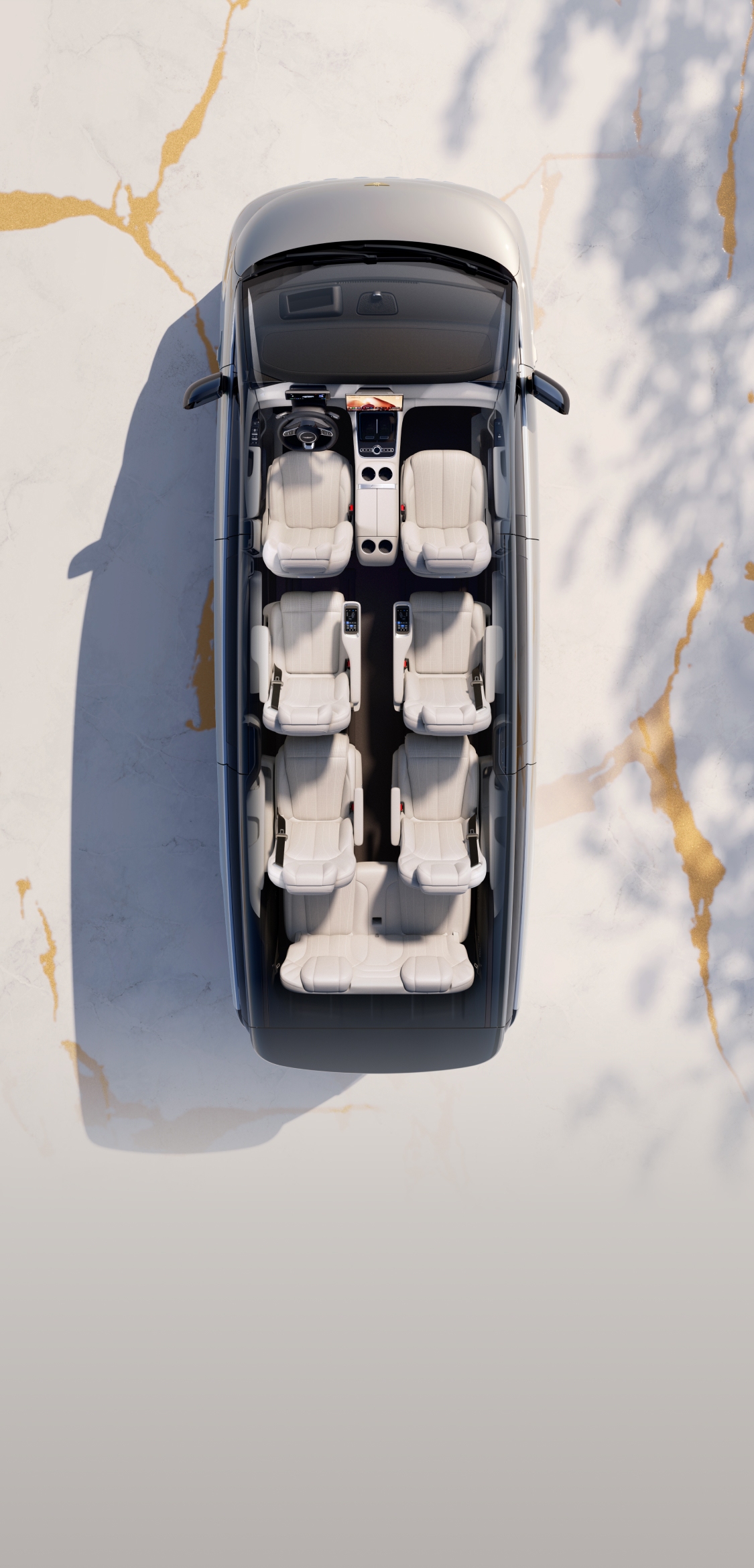
Comfort features are equally pragmatic: a 2+2+3 seven-seat configuration with synthetic leather upholstery offering soft touch and solid support; power-adjustable seats across all three rows; tri-zone independent climate control with dedicated rear outlets and temperature zones. Though air suspension is absent, the chassis tuning leans comfortably toward ride refinement — effectively absorbing road imperfections and minimizing fatigue on long journeys.
Pricing: Official MSRP Ranges from ¥309,800–¥369,800, with Substantial Incentives Lowering Effective Entry Cost
The V900 is offered in three trims, with official manufacturer suggested retail pricing between ¥309,800 and ¥369,800. Notably, select dealers are quoting starting prices as low as ¥269,800 — a maximum discount of ¥40,000. Purchase incentives include: ¥5,000 cash rebate; ¥15,000 purchase tax subsidy; ¥20,000 trade-in allowance; a free Advanced Driver Assistance Package valued at ¥25,000; lifetime warranty on battery, motor, and e-axle for first non-commercial owners; 6-year or 150,000-km comprehensive warranty; ¥3,999 home charging station installation package; and complimentary basic + 5-year entertainment data plans. With these bundled benefits, the effective entry cost falls significantly below the sticker price.
Conclusion: A Rational Choice Among Extended-Range MPVs — Understated, Yet Solidly Engineered

The Galaxy V900 isn't a product designed to dazzle with headline-grabbing specs — it's a family-oriented MPV engineered thoroughly across three key dimensions: range redundancy, safety redundancy, and feature redundancy. It avoids chasing zero-to-100 km/h acceleration records or stacking LiDAR units, instead focusing engineering rigor on proven strengths: extended-range system reliability, precision battery thermal management, structural body rigidity, and cockpit interaction stability — all benchmarked above class average. For buyers budgeting around ¥300,000 who prioritize long-distance convenience and passenger safety, the V900 offers a rare, well-balanced solution — perhaps not flashy, but deeply trustworthy.
Comments
0 commentsNo comments yet. Be the first!
Post Comment