
In recent years, BYD has accelerated its premiumization strategy — beyond Yang Wang and DENZA, the flagship SUV Dynasty Network, the BYD Tang, has finally been unveiled. We tested the 2026 model's all-electric, 850-km-range, dual-motor AWD variant with LiDAR — Flagship trim, priced at a manufacturer-suggested 289,900 yuan. For under 300,000 yuan, you get a full-size all-electric SUV measuring over 5.2 meters long and boasting a wheelbase exceeding 3.1 meters. But is it truly 'elegant and capable,' or merely 'imposing on the outside, hollow within'? This article avoids spec-sheet overload — instead, we assess design, powertrain, intelligence, pricing, and real-world usability to clarify what this 'big car' really delivers.
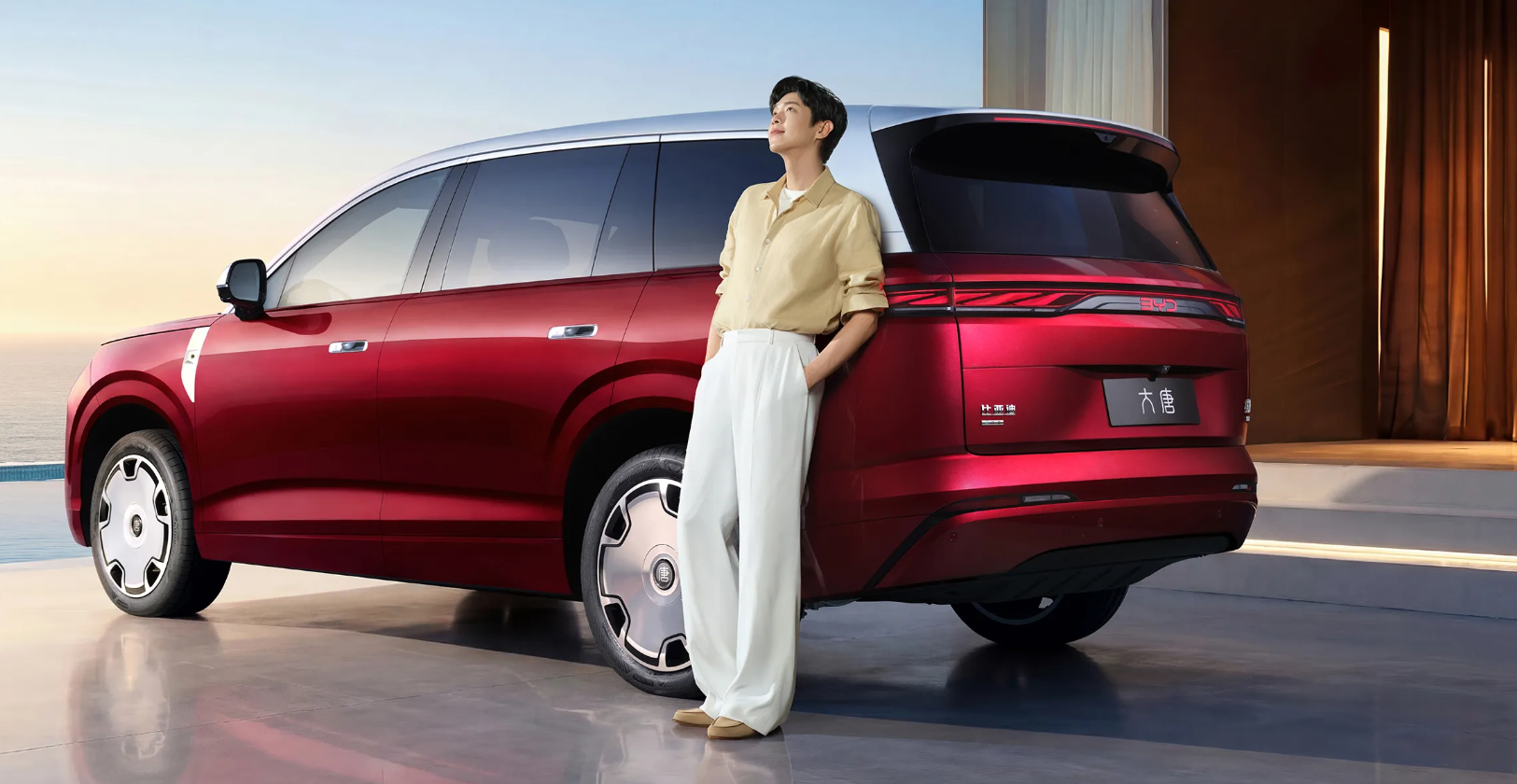
Design: 'Big' in Physical Terms — Undisputed
The first impression is sheer presence. Official dimensions stand at 5,263 mm long × 1,999 mm wide × 1,790 mm tall, with a 3,130-mm wheelbase. Its width nearly hits 2 meters; height approaches 1.8 meters — leaving minimal lateral clearance when parked in standard spots. It's visibly wider than mainstream midsize SUVs, and this 'dimensional inflation' isn't just for show — it directly anchors spatial benchmarks: commanding visuals and strong road presence come with trade-offs in parking convenience and narrow-street maneuverability.
Powertrain: 796 hp + 810 N·m — A 'Brute-Force' Accelerator
Equipped with front and rear dual motors, peak output reaches 796 hp (≈585 kW) and peak torque 810 N·m; it packs a 130.15-kWh lithium iron phosphate (LFP) battery, with a curb weight of 2,970 kg. Even so, the official 0–100 km/h sprint time is rated at 3.9 seconds, and top speed at 250 km/h. These figures continue BYD's signature 'brutalist aesthetics' — but real-world driving feel, thermal management stability, and sustained high-load performance still await dynamic testing validation.
Intelligence: Orin-X + God's Eye 5.0 — Hardware Ready, Experience Pending
For intelligent features, the vehicle integrates NVIDIA's Orin-X chip and BYD's in-house God's Eye 5.0 advanced driver-assistance system, plus LiDAR. Hardware specs rank among today's top tier — but software-level execution — including feature availability, urban NOA rollout timeline, and human-machine interaction smoothness — remains unannounced, with no concrete delivery schedule or verified real-world feedback yet. Notably, power-deployable side steps cost an extra 9,000 yuan — a highly practical add-on for a vehicle nearly 1.8 meters tall, though whether it's worth the premium depends entirely on user sensitivity to entry/exit convenience.
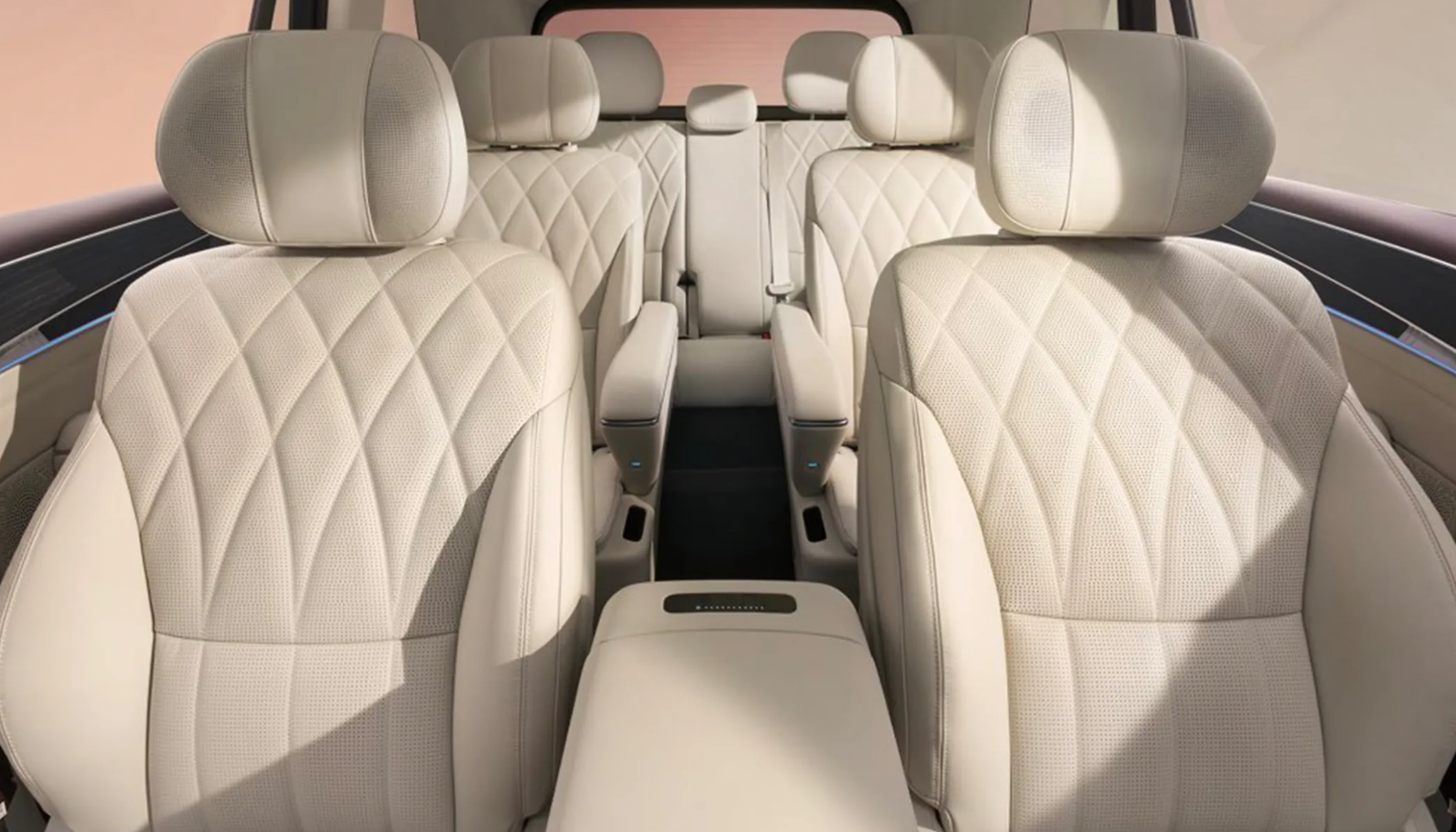
Interior Space: Three Rows That Actually Work — Comfort Fully Loaded
Space is where 'big' delivers most tangibly. A 180-cm-tall, 75-kg tester, seated comfortably in the front row, enjoys ~three fists of legroom in the second row — with a fully flat floor. The third row accommodates the same-sized passenger without knees touching the second-row seatbacks and with headroom to spare — not luxury-class for long hauls, but far beyond 'emergency-only' status, perfectly viable for everyday short trips. As a near-top-spec model, it comes standard with a refrigerator, infotainment screen, zero-gravity headrests, rear-seat fold-out tables, and multi-zone climate control — delivering genuine 'refrigerator, TV, and lounge sofa' premium comfort.
Pricing & Caveats: Does 289,900 Yuan Deliver Value?
At 289,900 yuan, this 5.2-meter-long, all-electric, AWD flagship SUV — with LiDAR and Orin-X — makes headlines. Yet the flip side includes energy-consumption concerns from its near-3-ton curb weight, urban maneuverability challenges posed by its >2-meter width, and the 9,000-yuan optional power-deployable side steps — a configuration strategy that boosts capability while raising the effective purchase threshold.
Conclusion: 'Big' Is Just the Starting Point — Not the Finish Line
BYD Datang EV's 'bigness' is undeniably real: large dimensions, spacious cabin, potent powertrain, and massive battery. But it hasn't yet proven it can translate 'big' into a consistently balanced user experience. Real-world range retention, urban intelligent-driving reliability, ride comfort, and energy efficiency remain unresolved critical questions. It's a dazzling-spec flagship — but whether it can become a trustworthy daily commuter and family hauler remains to be confirmed through extended, real-world use across diverse scenarios.
Comments
0 commentsNo comments yet. Be the first!
Post Comment